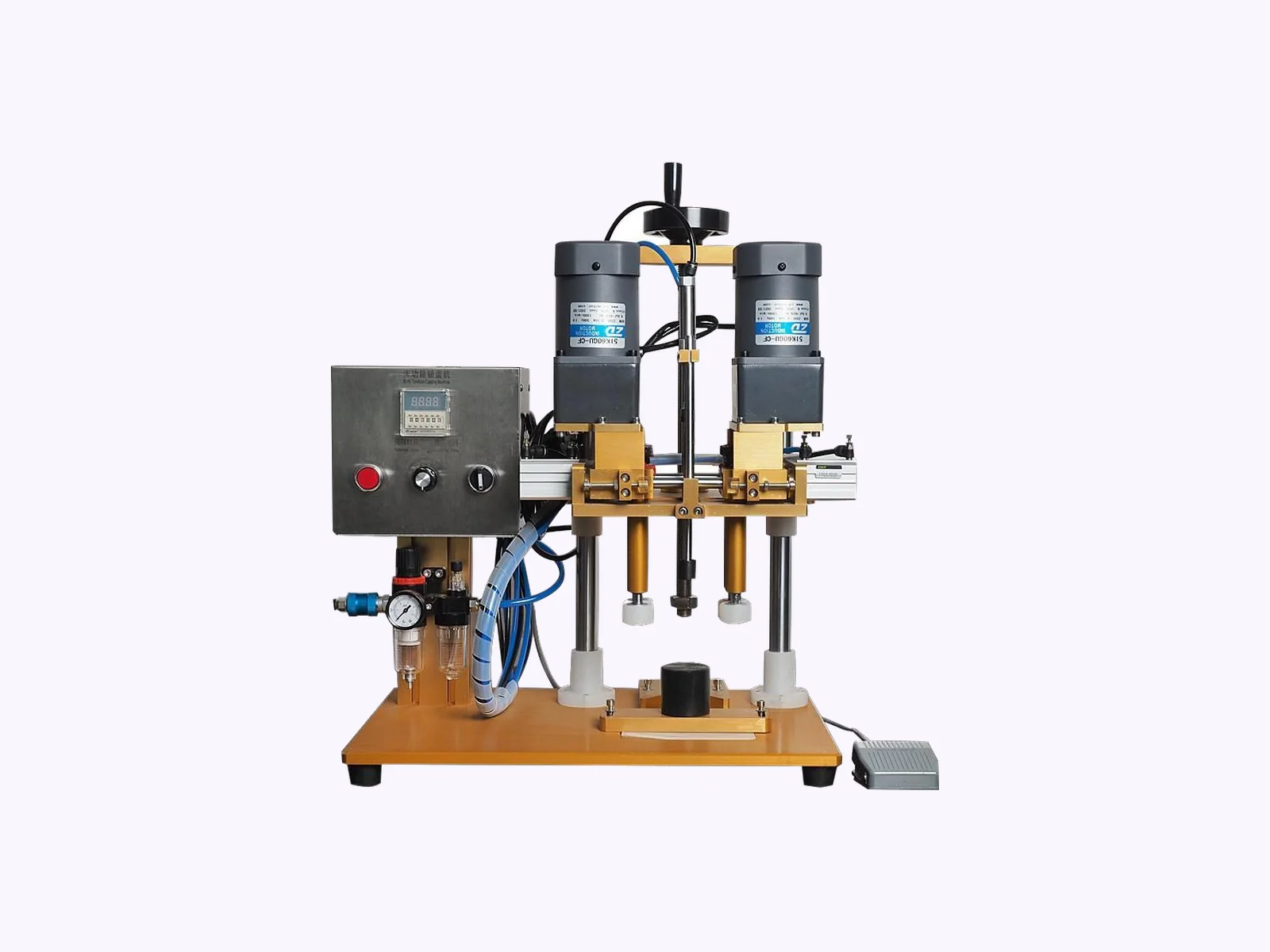
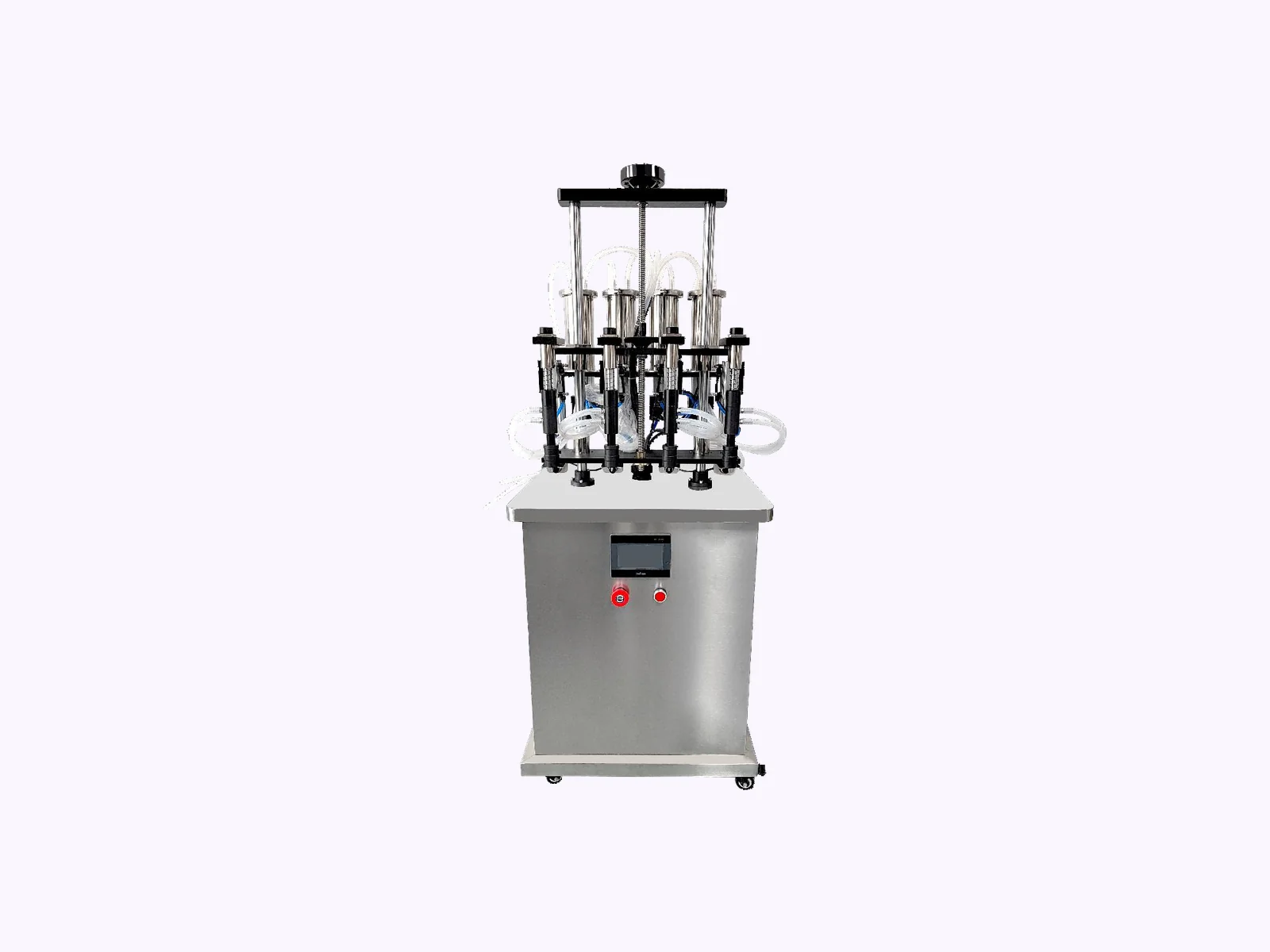
Who Builds Your Automatic Bottle Capping Machine?
Most of our core machines come out of our own factory. Build quality and delivery are our responsibility under the order terms.
When hand-capping cannot keep up with your filler, an automatic bottle capping machine takes over. Servo, press-on and four-head models run 40 to 90 bottles a minute on a conveyor.
Request a Quote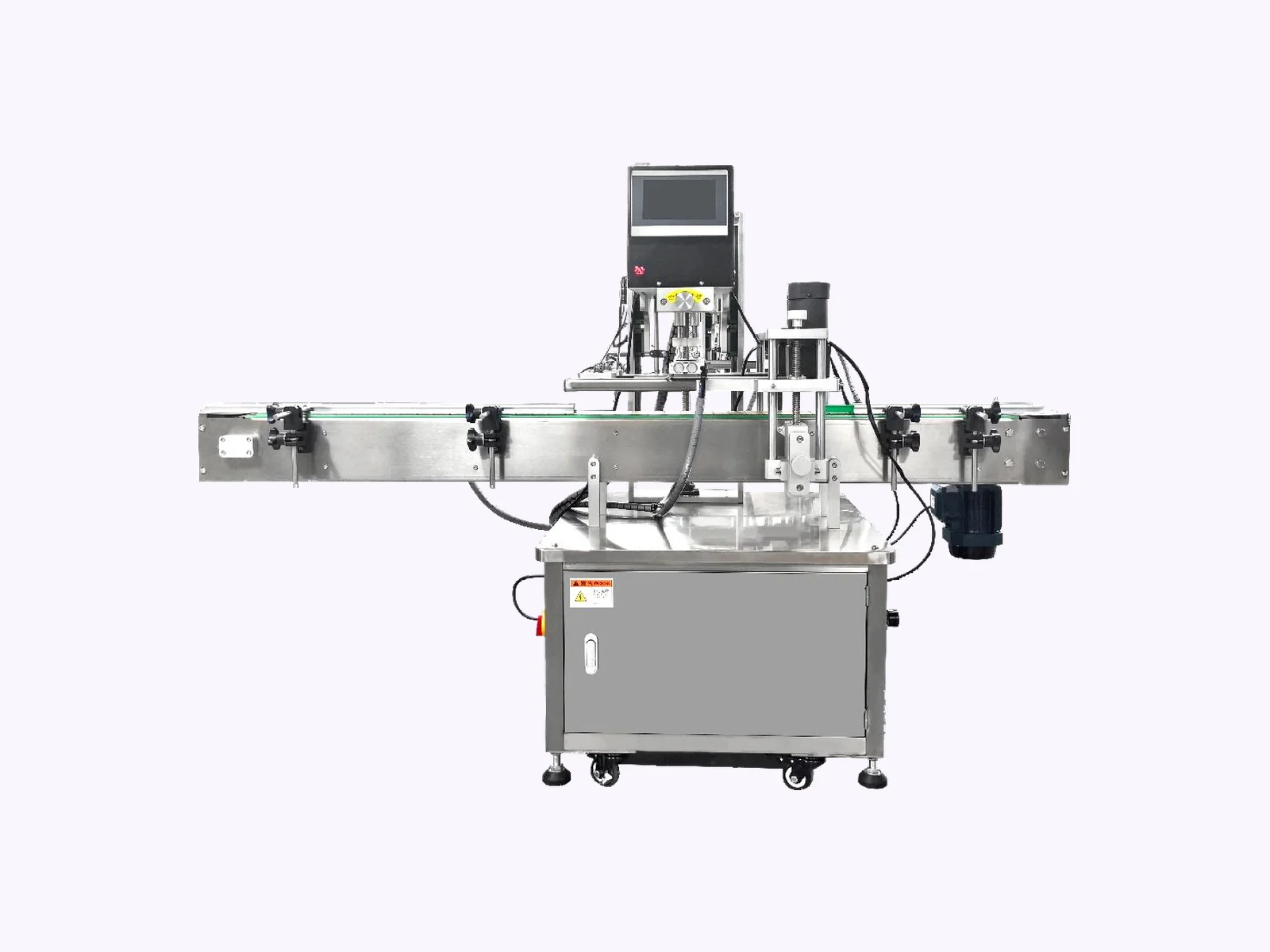
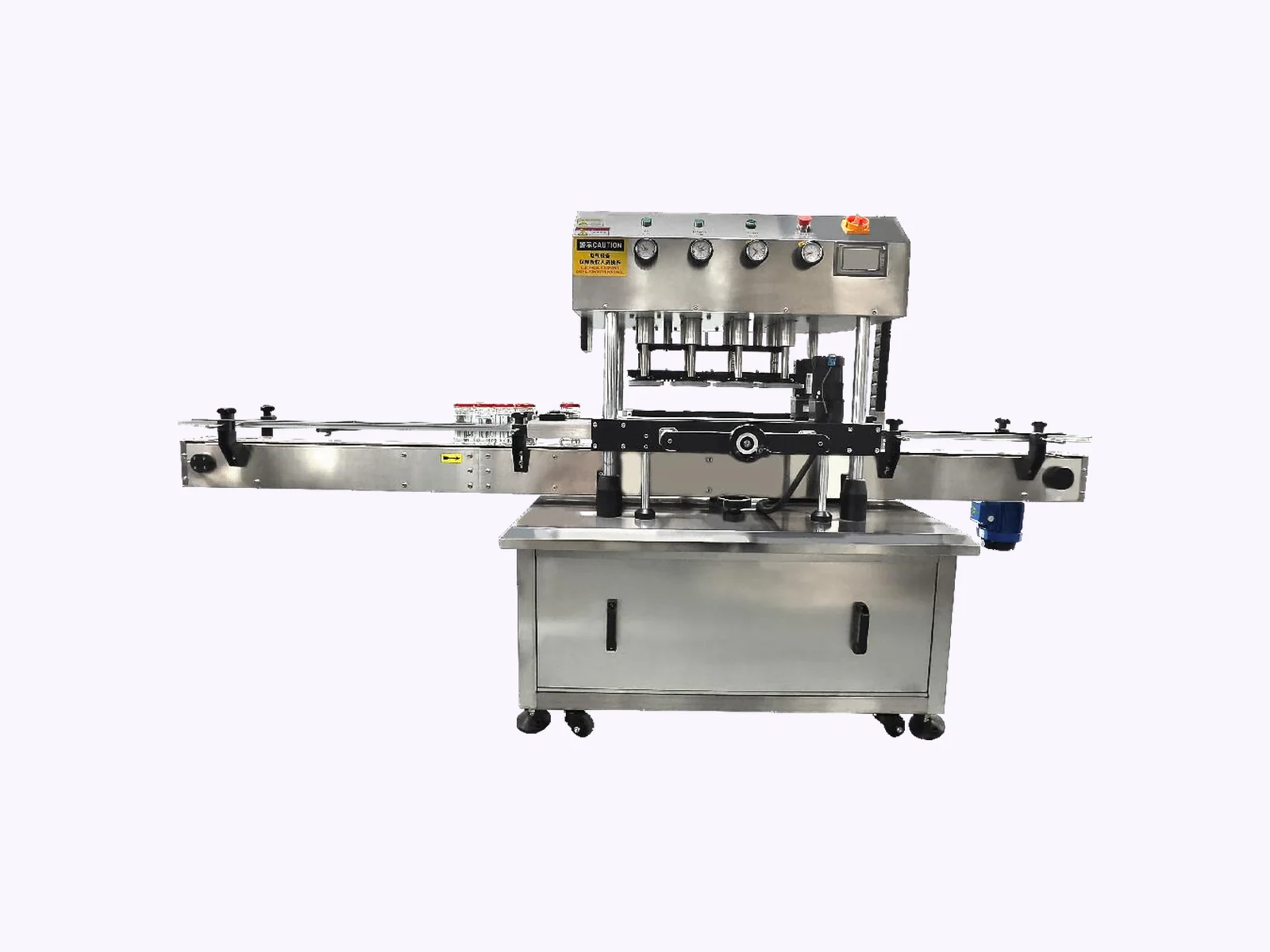
Automatic cappers take bottles off a conveyor, hold them on a chain, and close each with a servo screwing head, a press-on head or four screwing heads. The operator loads caps; the machine does the rest.
The servo model is rated at 3,000 rpm and a peak of 5,200 rpm, for caps 20 to 70 mm across. It takes pumps, duckbill caps and round threaded caps on round, square, glass and clear bottles. The four-head model is built for faster, heavier jars.
Discuss Your ApplicationWhat an automatic capper changes on a growing line.
Most of our core machines come out of our own factory. Build quality and delivery are our responsibility under the order terms.
Servo drive repeats the same tightening every bottle, which removes operator variation.
The capper sits on the same conveyor height as other machines, so bottles flow through.
Press-on models sense each bottle and cap before pressing, so empty positions are skipped.
Send your filler speed and bottle. We pick the capper that keeps up.
Three automatic cappers side by side.
Pick by cap action and speed.
| Parameter | Servo Capper | Press-On Capper | Four-Head Capper |
|---|---|---|---|
| Speed | 40–80 bottles/min | 40–60 bottles/min | 50–90 bottles/min |
| Cap diameter | 20–70 mm | 20–100 mm (custom) | 15–100 mm |
| Bottle height | 50–300 mm | 30–300 mm (custom) | 50–300 mm |
| Speed of head | 3,000 rpm rated, 5,200 max | Press action | Four heads |
| Power | Servo drive | 220 V, 0.37 kW; 0.4–0.6 MPa | 220 V, 1.5 kW |
| Weight and size | About 2000 × 800 × 1600 mm | 2000 × 680 × 1450 mm | About 350 kg; 3100 × 1100 × 1600 mm |
The cap decides the head.
| Parameter | What We Check |
|---|---|
| Cap | Threaded, pump, duckbill or snap-on. Each needs a different head. |
| Size | Cap diameter within 20–70 mm on the servo capper, 15–100 mm on the four-head. |
| Bottle | Round, square, glass or clear. Check the base of the bottle. |
| Chain | The servo line uses a 114 mm wide, 2 m plastic chain. |
Plan the whole line.
| Parameter | What We Check |
|---|---|
| Length | The servo and press-on cappers are about 2 m long; the four-head is about 3.1 m. |
| Electrical | Tell us your supply. |
| Air | The press-on capper needs 0.4–0.6 MPa of compressed air. |
| Heights | Match the conveyor height to your filler. |
Test over a run.
| Parameter | What We Check |
|---|---|
| Torque | Measure the removal torque on 50 bottles across a run. |
| Straightness | Check that no cap is cross-threaded. |
| Marks | Look for scuffs on the cap and the neck. |
| Run | Agree a run time and an acceptable number of stops. |
Do not let the capper limit the line.
| Parameter | What We Check |
|---|---|
| Match | Run the capper at or above the speed of the filler. |
| Cap supply | Plan a feeder or hand feeding at the rate you need. |
| Changeover | Allow time to change to another bottle size. |
The automatic cappers next to a benchtop unit.
| This EquipmentServo Capper | Press-On Capper | Four-Head Capper | Benchtop Capper | |
|---|---|---|---|---|
| Bottle feeding | Conveyor | Conveyor | Conveyor | By hand |
| Speed | 40–80/min | 40–60/min | 50–90/min | 25–50/min |
| Torque control | Servo | Not applicable | Head clutch | Mode setting |
| Best for | Pumps | Snap-on caps | Jars | Small runs |
| Check first | Cap diameter | Snap profile | Jar thread | Bottle height |
Four automatic capping jobs.
Servo torque protects decorative pump heads. Send the pump with its dip tube.
Discuss This Application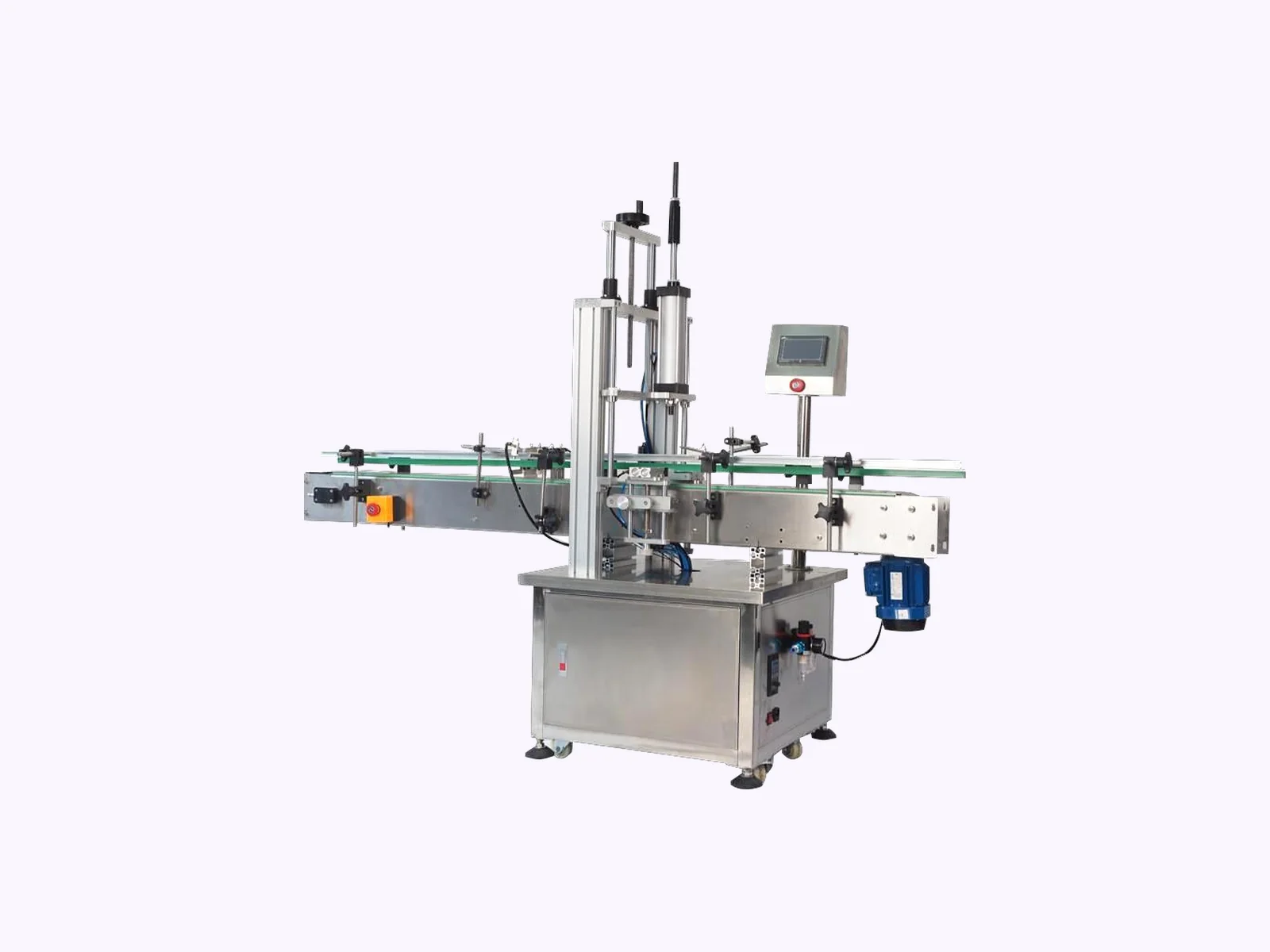
A sensor times each press. Send the cap profile.
Discuss This ApplicationFour heads run threaded jars at speed. Send the jar thread.
Discuss This Application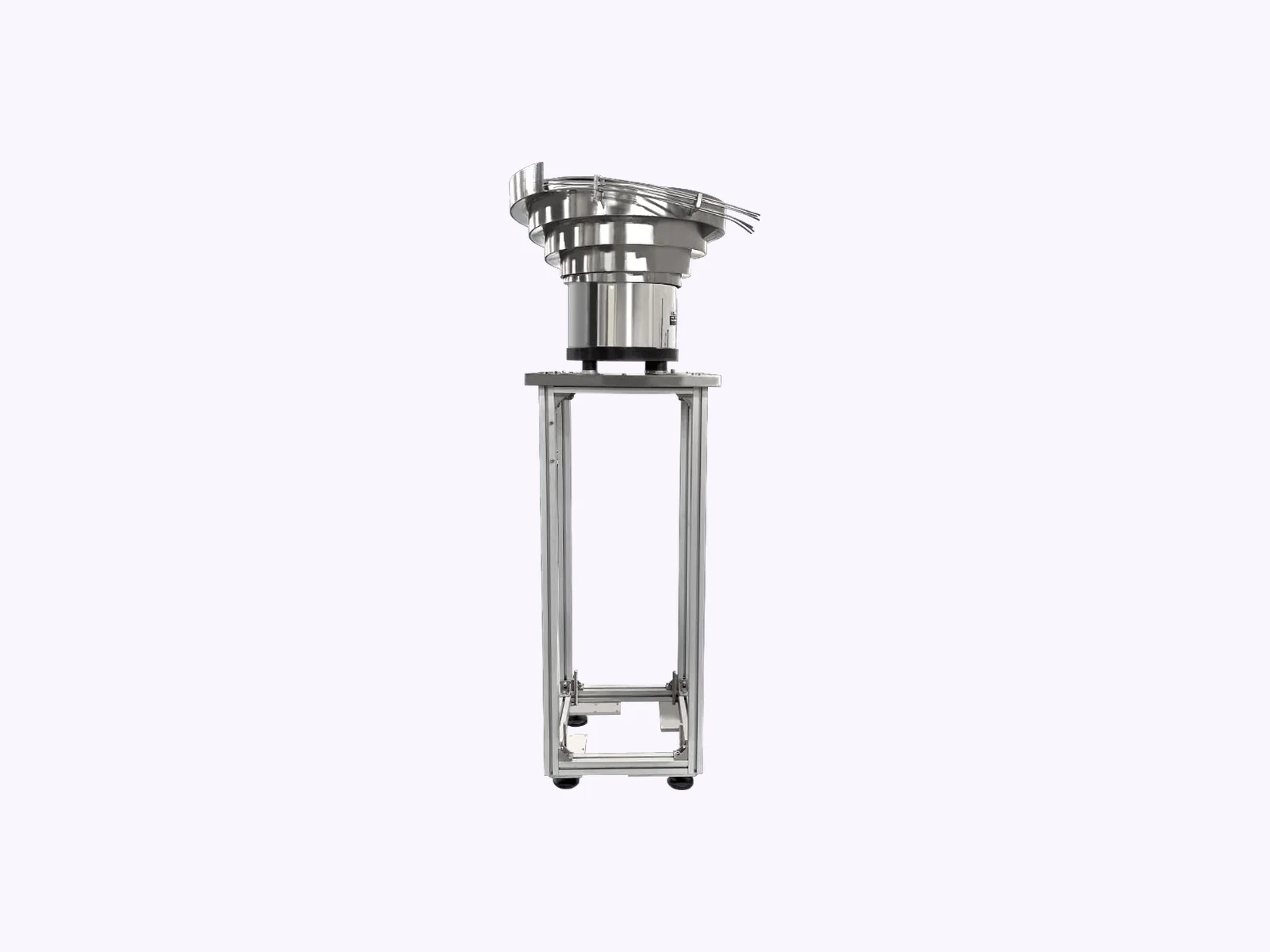
A vibratory cap feeder, available on request, orients caps for fast lines.
Discuss This ApplicationWhat goes wrong at line speed.
Write the test method, the torque target and what ships with the machine into the quotation.
Discuss Acceptance CriteriaWith these details we can pick the right automatic capper.
Have another material or format?
Share your requirements.
Send your cap, bottle and line speed.
We pick the servo, press-on or four-head capper.
Agree a run test with torque and jam counts.
Review the price, the automatic bottle capping machine configuration and terms.
Run the checks you agreed on the automatic bottle capping machine, then pack and ship.
The servo capper runs 40–80 bottles a minute, the press-on capper 40–60 and the four-head capper 50–90.
It is the speed of the screwing head: 3,000 rpm rated and up to 5,200 rpm. Torque, not speed, decides tightness.
Yes. The servo capper takes round, square, glass and clear bottles, and the rails are set for each shape.
Not always. A feeder (available on request) helps at high speed; at lower speed an operator can feed caps.
Yes, on a shared conveyor. Send your layout and the heights of your other machines.
Tell us the cap and the line speed first. Add the rest when you have it.
Send the cap, the bottle and your filler speed. We reply with the capper we recommend.
Get a Quote