Who Builds Your Wick Cutting Machine?
Most of our core machines are made in our own factory. Your quotation names who builds this model, the configuration and what is tested before shipment.
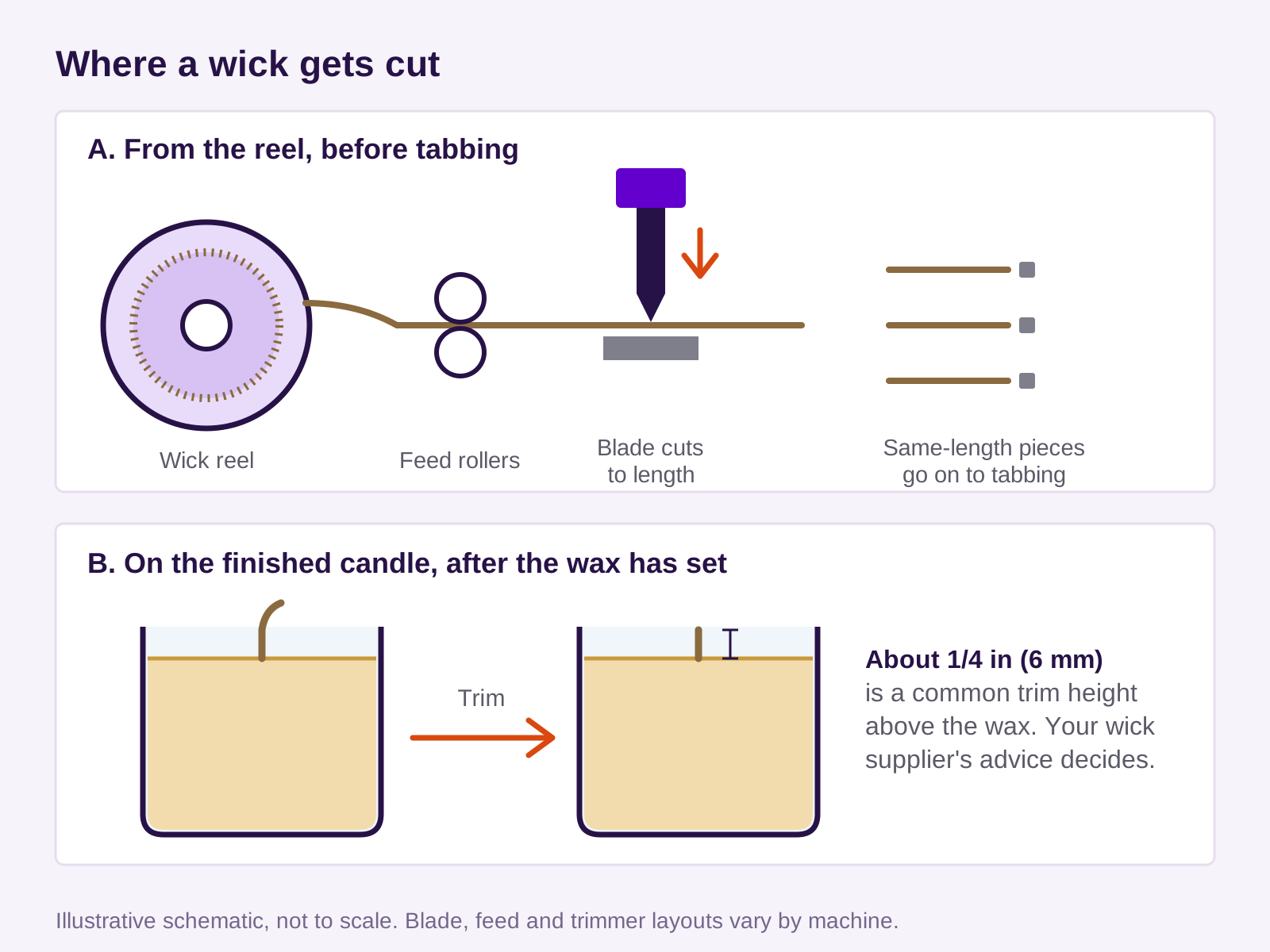
Hand-trimmed wicks come out at different lengths. A wick cutting machine cuts every wick to the same length, either from a reel before tabbing or on the finished candle.
Request a QuoteView Photos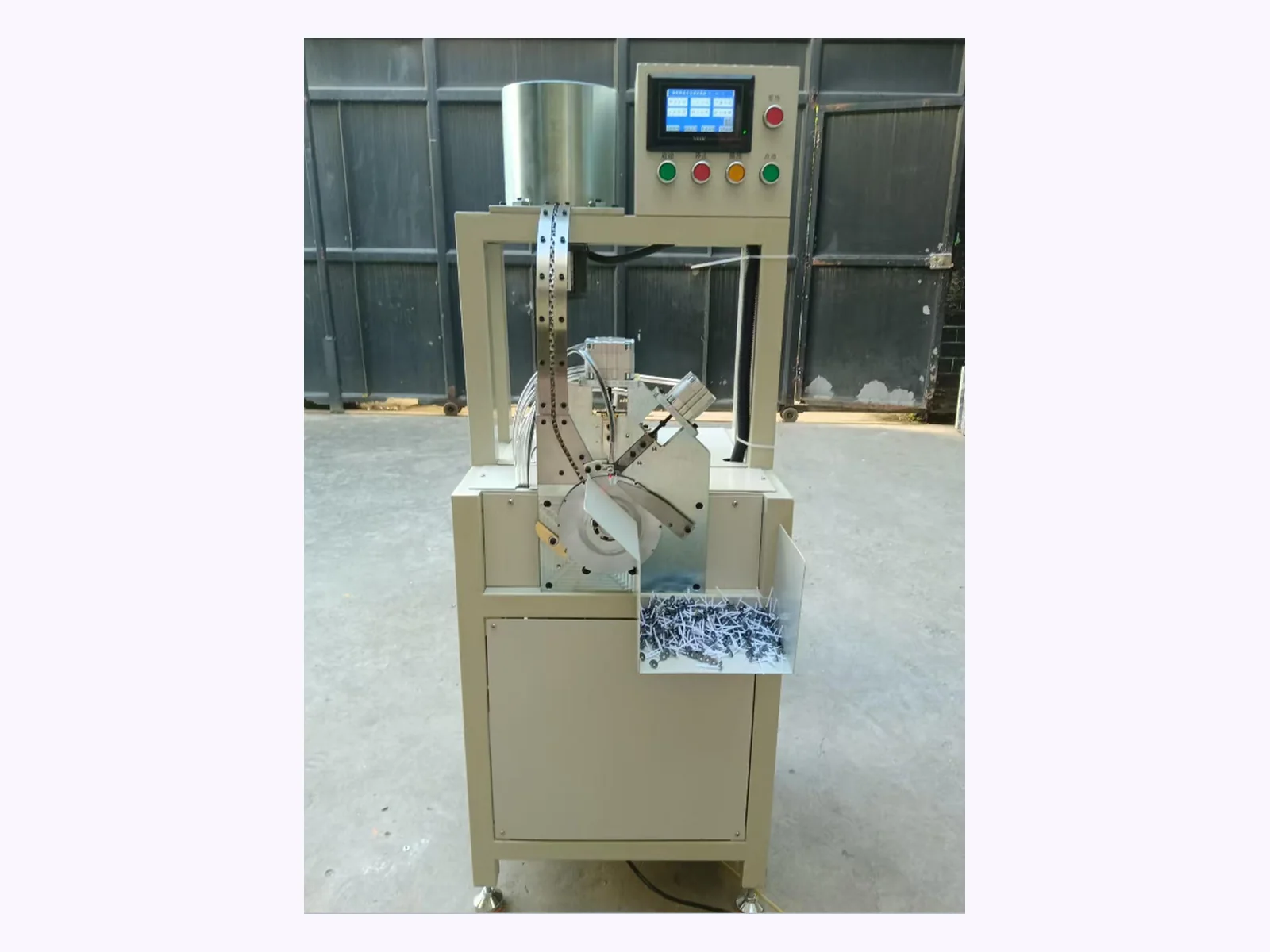
Cutting happens in two places. At the reel, wick is cut to length before it is tabbed. On the finished candle, the wick is trimmed to a set height above the wax. Cut by hand, wicks end up at slightly different lengths, and that shows up later as flames of different sizes.
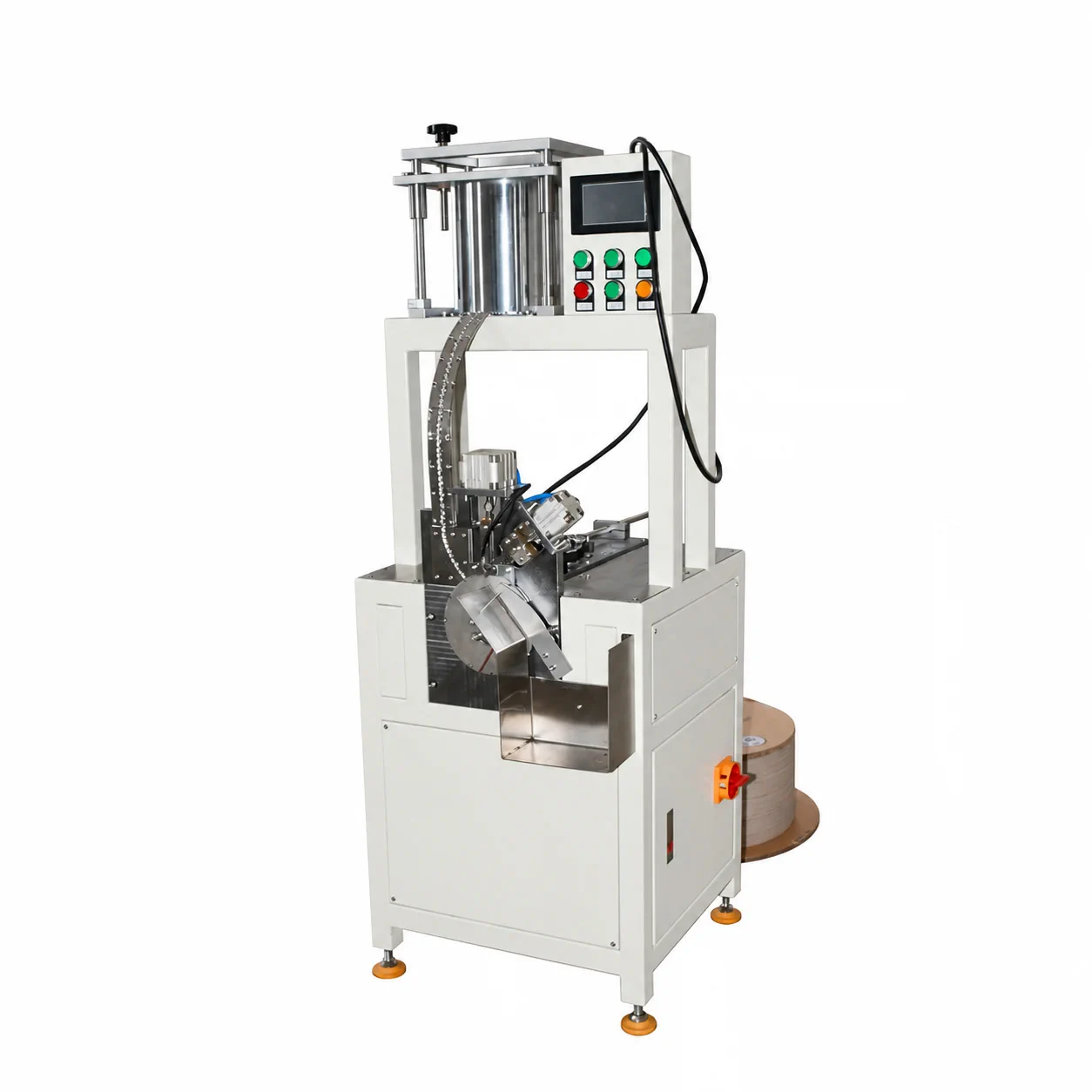
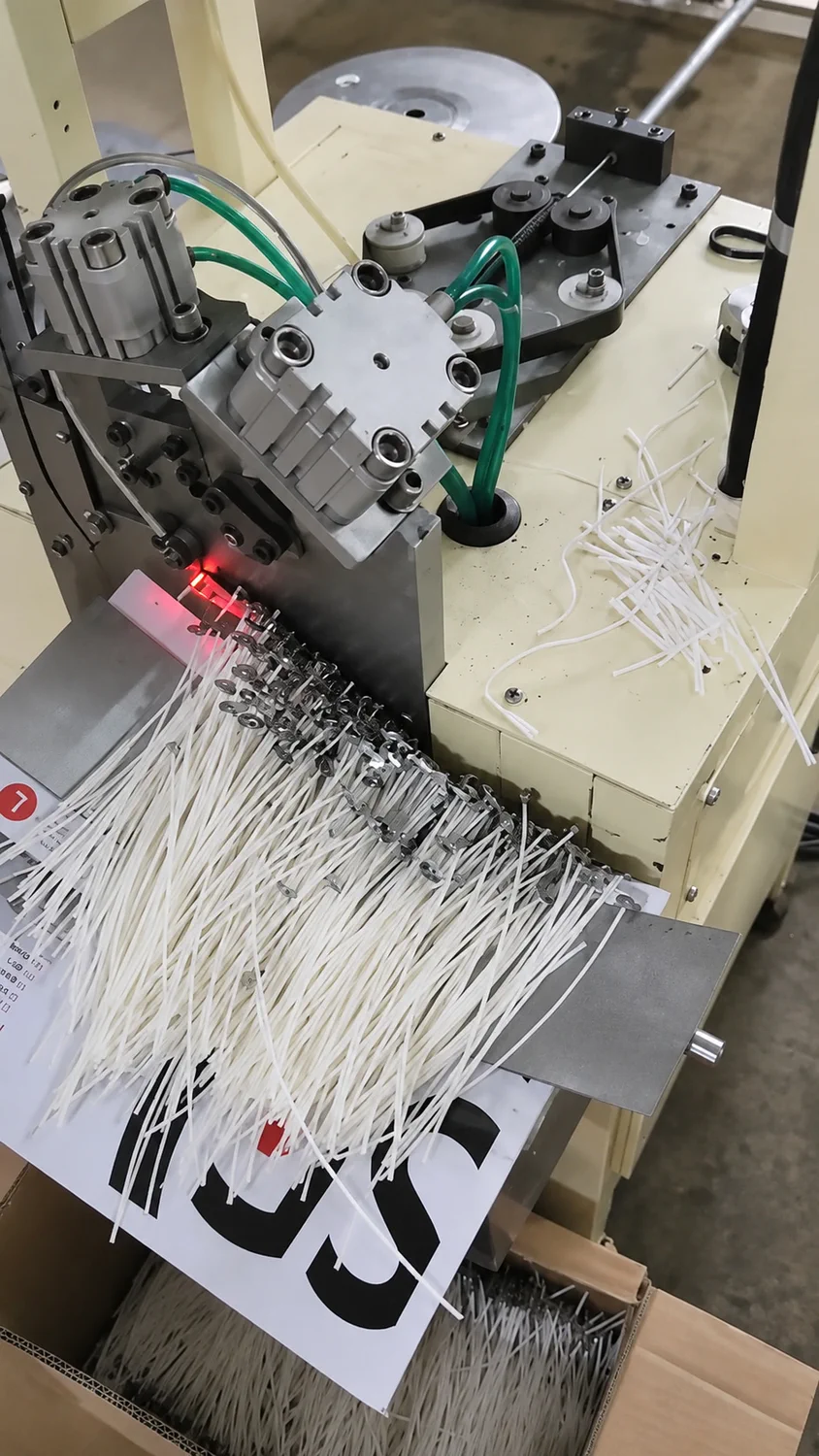
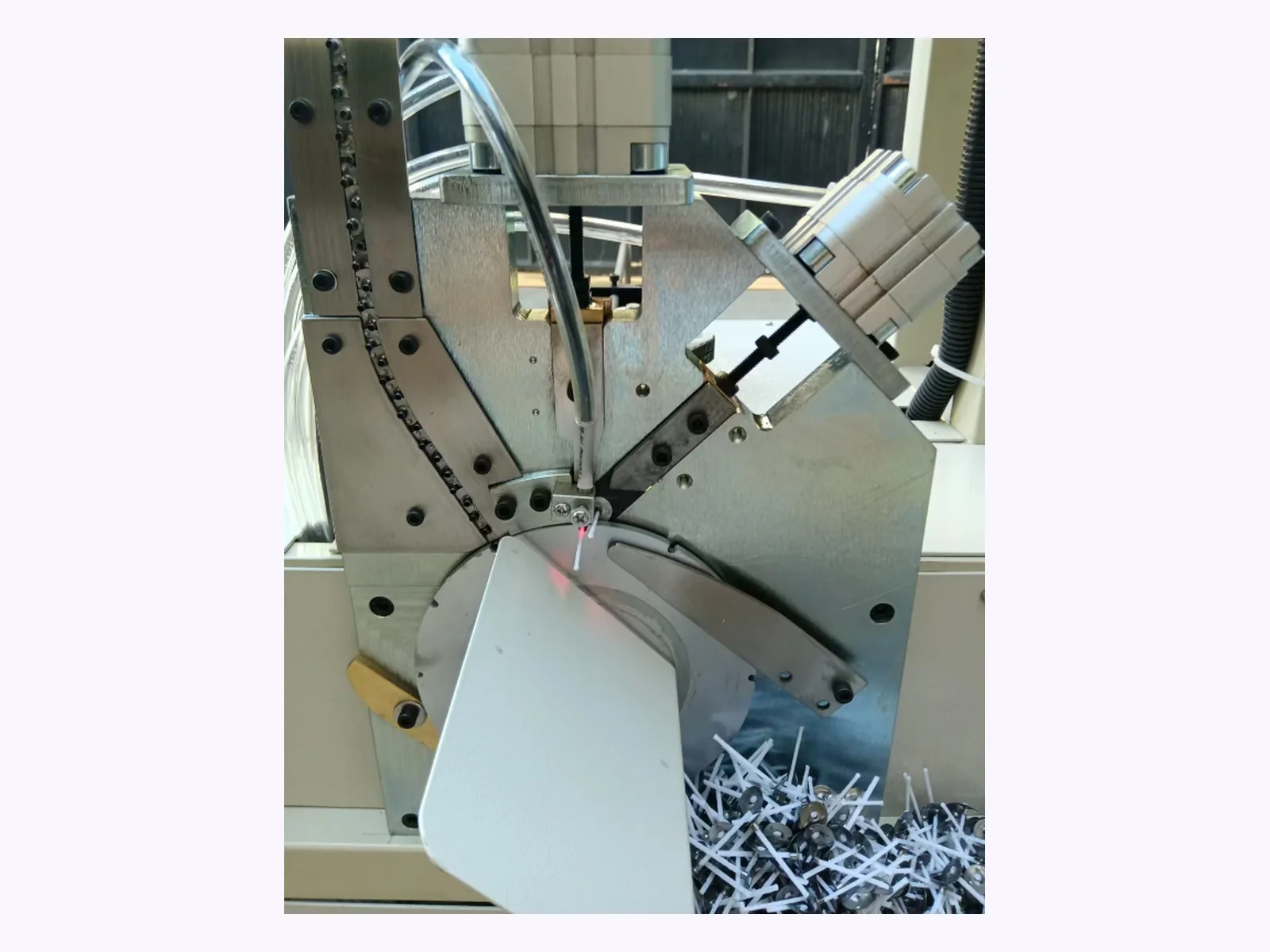
Our wick tabbing machine sets wick length with one key and stops with an alarm if a tab is missing or the wick breaks, so it covers the reel cut. A standalone reel cutter, or a trimmer for finished candles, is quoted per wick type. We do not publish cutter models yet. Send a wick sample and your cut lengths and we tell you what we would build.
Discuss Your ApplicationThese four decisions shape the machine.
Most of our core machines are made in our own factory. Your quotation names who builds this model, the configuration and what is tested before shipment.
Cotton, paper-core and wood wicks cut differently. Blade type and speed depend on the wick.
State the shortest and longest cut you need, and how often it changes.
A reel cutter and a candle trimmer are different machines. Say which step you need.
Send a sample of the wick you use and the lengths you cut. We tell you what we would quote.
Reel cutting makes the wick blanks and trimming sets the height on the finished candle. The need is the same for both: the same length every time.
Match the blade to the wick first. It matters more than cutting speed.
| Method | How It Works | Suits | Watch For |
|---|---|---|---|
| Cold blade (shear) | A sharp blade shears the wick against a fixed edge | Cotton and paper-core wick | Dull blades fray the end; waxed wick leaves residue on the blade |
| Hot blade | A heated blade cuts the wick and seals the end | Synthetic or coated cores that fray | Needs temperature control and ventilation |
| Candle wick trimmer | A scissor or rotary blade trims the wick on the finished candle | Finished candles, trimmed to a set height | Needs a guide so every cut lands at the same height |
| Wood wick cutter | A heavier blade or saw cuts flat wood wicks | Wood wicks | Wood can splinter; it needs its own blade |
Cut length is the jar depth plus the wick you want standing above the rim. This example uses an assumed jar.
The jar is assumed. Send your jar depth and the stand-up you want above the rim, and we confirm the cut length, including the tab and crimp allowance, in the quotation.
Write the test method, the pass criteria and what ships with the machine into the quotation.
Discuss Acceptance CriteriaWith these details we can say what we would build for your wick.
Have another material or format?
Share your requirements.
Cutting machines are configured per order. These tables list what we confirm.
The core choices that change the machine.
| Parameter | What to Confirm |
|---|---|
| Cutting point | From a reel before tabbing, or on the finished candle. |
| Blade | Cold or hot, blade material and how it is replaced. |
| Length setting | Fixed, stepped or set on a screen. |
| Feed | Powered feed with tension control for reel wick. |
| Output | Into a bin, or straight into a tabbing machine. |
Wick type sets the blade and speed.
| Parameter | What We Check |
|---|---|
| Material | Cotton, paper core, wood or other. |
| Size | Width, thickness or ply. |
| Waxed or plain | Pre-waxed wick leaves residue on the blade. |
| Reel | Outside diameter and core size. |
| Lengths | Shortest and longest cut. |
Settle the layout around your tabbing or filling area.
| Parameter | What We Check |
|---|---|
| Footprint | Station size and the reel stand. |
| Air or power | Pneumatic or electric supply. |
| Waste | Where lint and offcuts go. |
| Operator | Where the person stands and how a reel is changed. |
Judge the cut itself.
| Parameter | What We Check |
|---|---|
| Length | Measure a sample of cuts against the setting. |
| End | Check for fray or crush. |
| Run | Measure at the start and the end of a long run. |
| Blade wear | Ask how often blades need changing. |
Cutting should not limit tabbing or filling.
| Parameter | What We Check |
|---|---|
| Rate | Match to your tabbing or pouring speed. |
| Reel changes | Time to load a new reel. |
| Blade changes | How long a blade change takes. |
The two cutting points next to tabbing, hand scissors and pre-cut wicks.
| This EquipmentWick Cutting Machine | Wick Tabbing Machine | Hand Scissors | Pre-Cut Wicks | |
|---|---|---|---|---|
| What it does | Cuts wick to length | Cuts and joins wick to its tab | Trims by hand | Buy cut wicks |
| Repeatability | High | High, set with one key | Varies | Set by supplier |
| Labor | Low | Low | High | None |
| Best for | Steady wick use | Making tabbed wicks in-house | Small batches | Low volume |
| Check first | Wick type and blade | Wick length and tab size | Speed | Cost per wick |
Four places a cutter fits in the wick workflow.
Our tabbing machine sets wick length with one key and stops with an alarm if a tab is missing or the wick breaks.
Discuss This ApplicationThe clamping mechanism joins wick and metal base. Send your wick and tab sizes.
Discuss This Application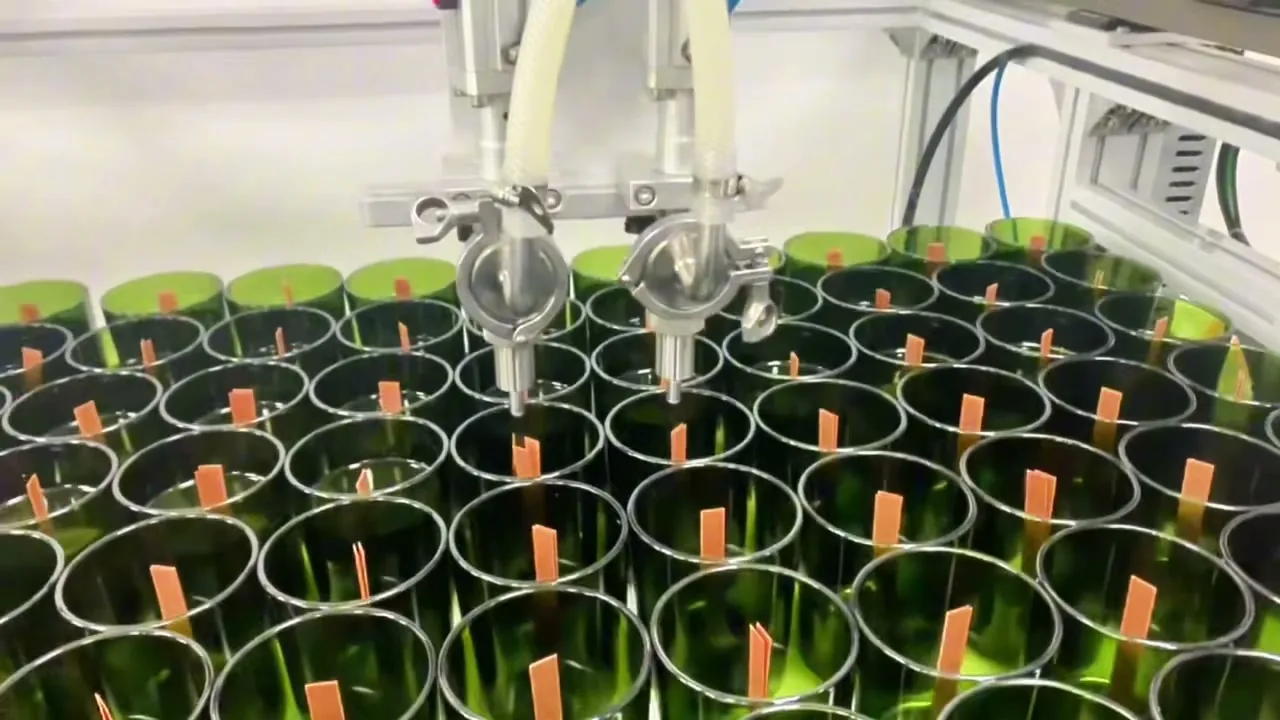
A trim step sets a clean wick height above the wax. Send your target height and wick type.
Discuss This Application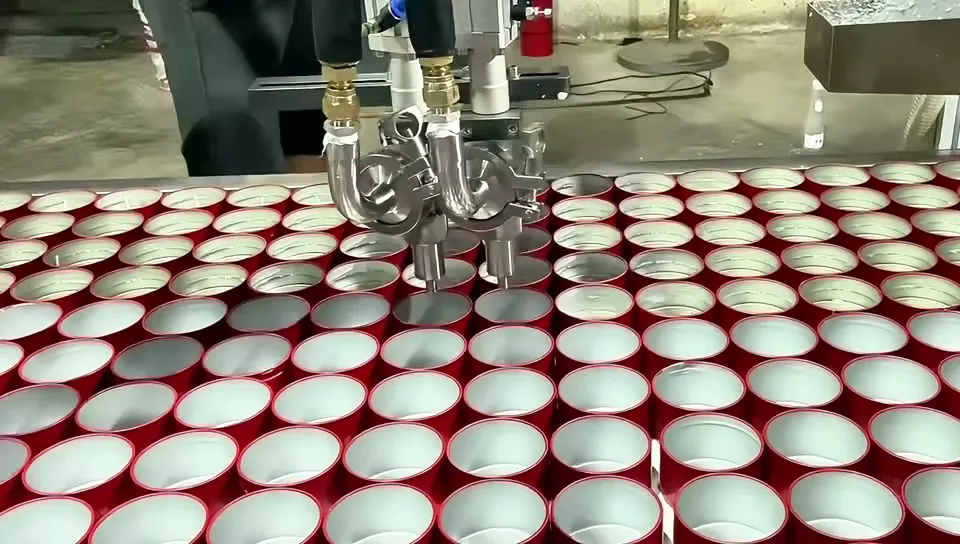
Wood wicks need a different blade. Send a sample so we can test it.
Discuss This ApplicationWhat candle makers ask about cutting before they order.
Send a wick sample, cut lengths and wicks per hour.
We describe the cutter we would build.
Agree a cutting test and how length is judged.
Review the price, the wick cutting machine configuration and terms.
Run the checks you agreed on the wick cutting machine, then pack and ship.
Yes. It sets wick length with one key and clamps the wick to the tab. It stops with an alarm if a tab is missing or the wick breaks.
Not yet. We quote cutters per wick type. Send a sample and your cut lengths and we tell you what we would build.
Jar depth plus the length you want standing above the rim, plus any tab and crimp allowance. For a 90 mm jar and 25 mm of stand-up, that is about 115 mm before the allowance. We confirm the figure for your jar.
Usually not with one blade. Wood needs a different blade. Tell us which wicks you use.
About 1/4 in (6 mm) above the wax is a common starting point for cotton wicks. Your wick supplier gives the figure for each wick type, and wood wicks usually call for a different trim.
Yes, with a trimmer set to a height above the wax. We quote it per wick and candle.
A wick sample, cut lengths, wicks per hour and your supply. Photos help.
Tell us the wick and the cut lengths first. Add the rest when you have it.
Send a length of wick and your cut lengths. We reply with what we would build.
Get a Quote