Who Builds Your Bottle Capping Machine?
Most of our core machines are made in our own factory. We take responsibility for manufacturing, quality and delivery under the agreed order terms.
A loose or scuffed cap gets a bottle returned. Our bottle capping machines tighten threaded and press-on caps at 25 to 90 bottles a minute, with servo torque for pumps and decorated caps.
Request a Quote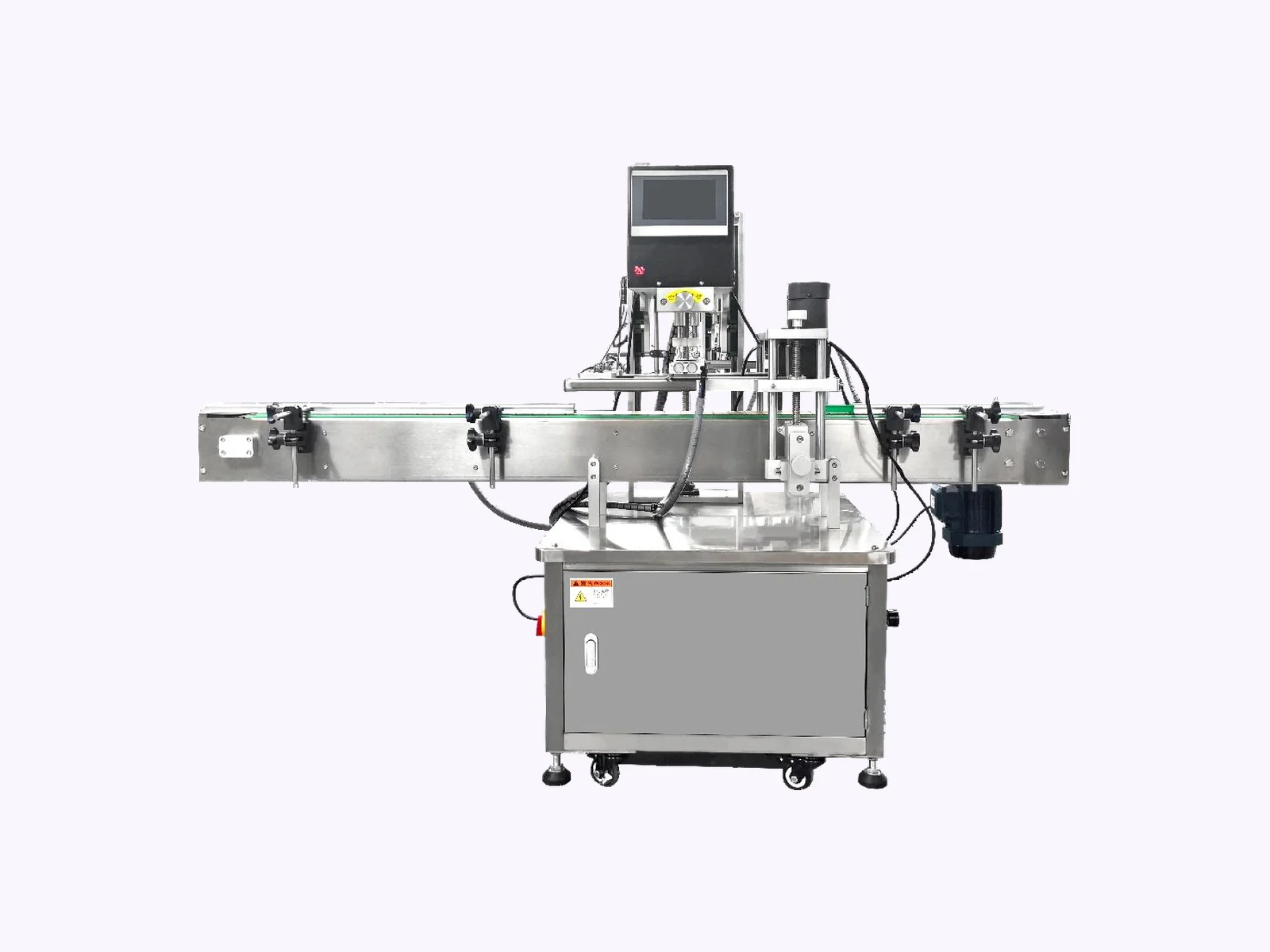
Capping looks simple until the cap is a pump, a duckbill or a lipped snap-on. Our servo capper tightens threaded caps and pumps to a set torque; the press-on capper seats snap-on caps with a photoelectric sensor; and the four-head capper runs threaded jars at speed.
A benchtop capper covers small runs with automatic or manual mode. All of them are listed for round, square, glass and clear bottles. Tell us the cap and the neck and we check the match.
Discuss Your ApplicationThese four points decide which capper fits.
Most of our core machines are made in our own factory. We take responsibility for manufacturing, quality and delivery under the agreed order terms.
Threaded caps need a screwing head; snap-on caps need a press. Check which your closure is.
The servo capper tightens to a set value, which protects pumps and decorative caps from damage.
Bottle height and diameter set the guide rails and chain width. Send the tallest and shortest bottle.
Send the cap, the bottle and your bottles per minute. We recommend a capper.
Four cappers side by side. Voltage, air and options are stated in your quotation.
Pick by cap type and speed.
| Parameter | Servo Capper | Press-On Capper | Four-Head Capper | Benchtop Capper |
|---|---|---|---|---|
| Cap action | Screws threaded caps | Presses snap-on caps | Screws jar caps | Screws caps |
| Speed | 40–80 bottles/min | 40–60 bottles/min | 50–90 bottles/min | 25–50 bottles/min |
| Cap diameter | 20–70 mm | 20–100 mm (custom) | 15–100 mm | Spray and threaded caps |
| Bottle height | 50–300 mm | 30–300 mm (custom) | 50–300 mm | 15–350 mm |
| Power | Servo; confirmed per order | 220 V, 0.37 kW; 0.4–0.6 MPa | 220 V / 50 Hz, 1.5 kW | 220 V, 120 W; 0.4–0.6 MPa |
| Size (mm) | 2000 × 800 × 1600 | 2000 × 680 × 1450 | 3100 × 1100 × 1600 | 500 × 380 × 700 |
Fit is checked on the real parts.
| Parameter | What We Check |
|---|---|
| Cap type | Screw cap, pump, duckbill or snap-on; each needs a different head. |
| Torque | State how tight the cap must be, or send a torque value. |
| Bottle | Round, square, glass or clear plastic; the guide rails differ. |
| Dip tube | A long tube changes how the pump is lowered into the bottle. |
Conveyor machines are long.
| Parameter | What We Check |
|---|---|
| Layout | The servo and press-on cappers are about 2 m long; the four-head about 3.1 m. |
| Electrical | Tell us your supply voltage. |
| Air | The press-on and benchtop cappers need 0.4–0.6 MPa of compressed air. |
| Linking | The capper sits between the filler and the labeler, so check the conveyor heights. |
Test tightness and cap condition.
| Parameter | What We Check |
|---|---|
| Torque | Measure the removal torque on a batch of capped bottles. |
| Thread | Check that caps sit straight and are not cross-threaded. |
| Marks | Look for scuffs on the cap and the neck. |
| Leak | Lay capped bottles on their side for a set time. |
Match the capper to the filler.
| Parameter | What We Check |
|---|---|
| Speed | Choose a capper at or above your filler speed. |
| Cap feeding | A cap feeder (on request) keeps a fast capper supplied. |
| Changeover | Time to change rails and heads between bottles. |
The four cappers by cap type and speed.
| This EquipmentServo Capper | Press-On Capper | Four-Head Capper | Benchtop Capper | |
|---|---|---|---|---|
| Best for | Pumps and threaded caps | Snap-on caps | Threaded jars at speed | Small runs |
| Speed | 40–80/min | 40–60/min | 50–90/min | 25–50/min |
| Operator | Conveyor fed | Conveyor fed | Conveyor fed | Hand fed |
| Footprint | 2 m line | 2 m line | 3.1 m line | Bench top |
| Check first | Cap diameter 20–70 mm | Snap profile | Jar thread | Cap height |
Four capping jobs and the capper for each.
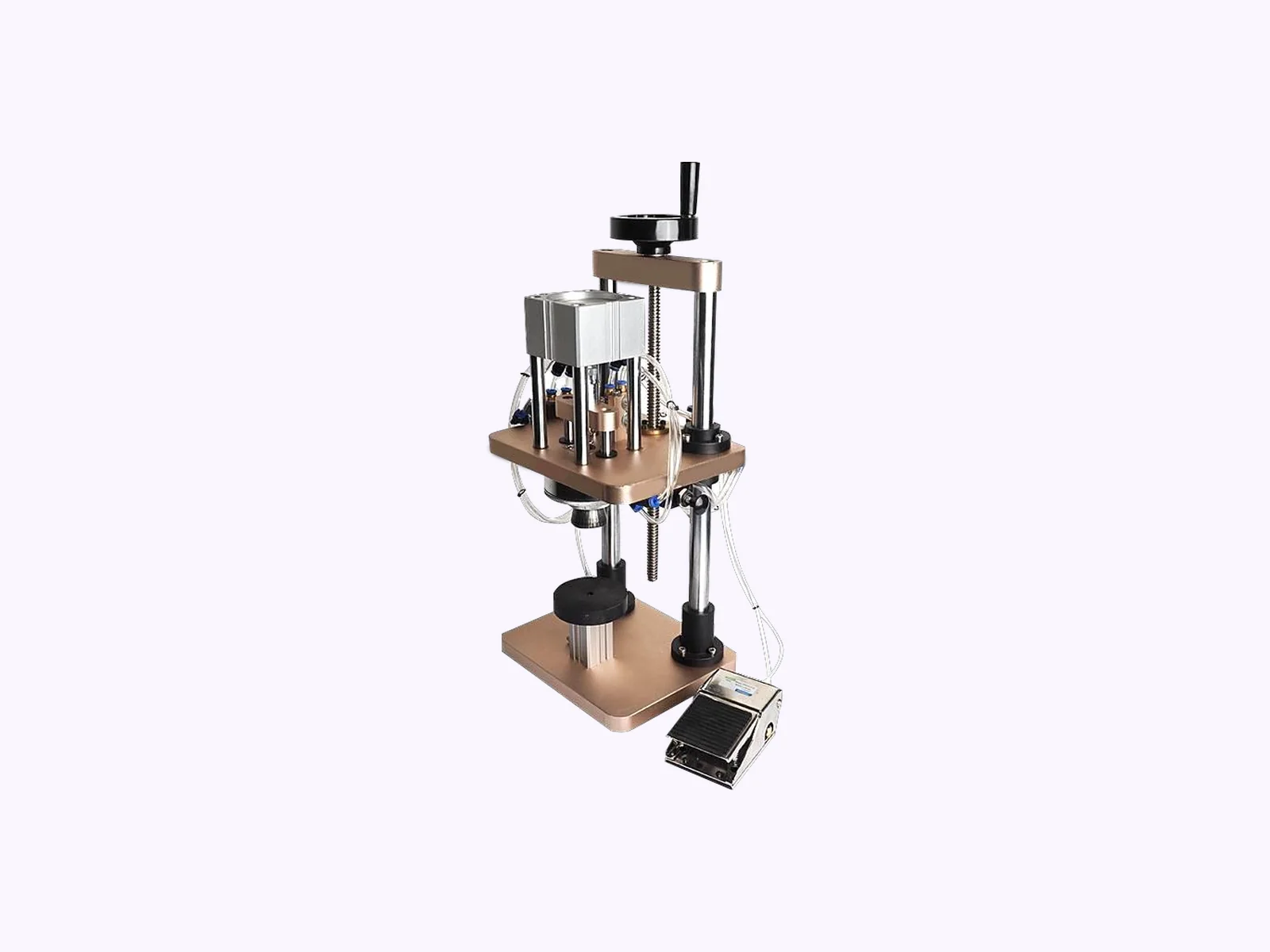
The servo capper tightens to a set torque, and its heads turn up to 5,200 rpm. Send your pump so we can check torque and dip tube clearance.
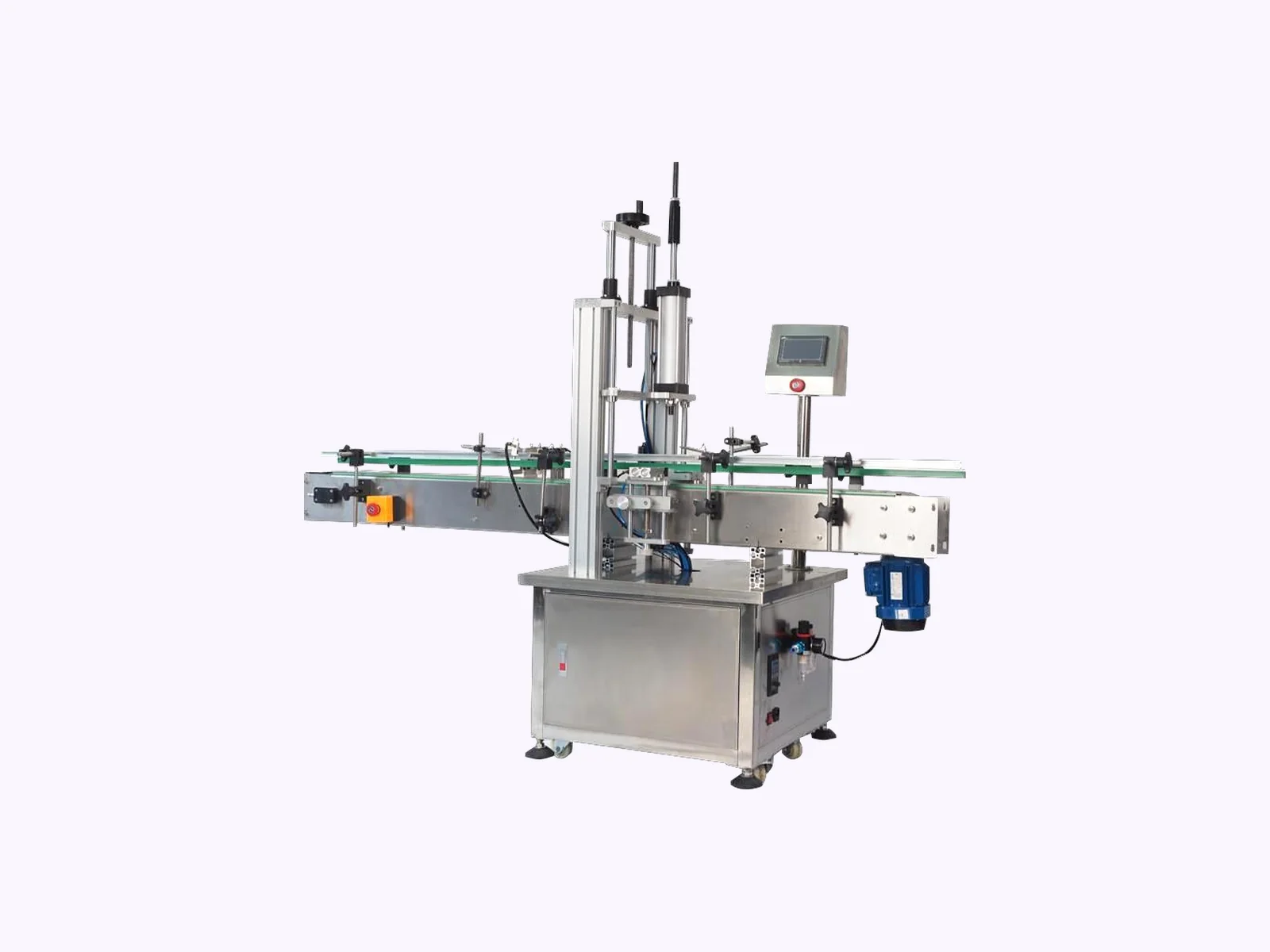
Discuss This ApplicationA photoelectric sensor times the press. Send the cap profile and diameter.
Discuss This Application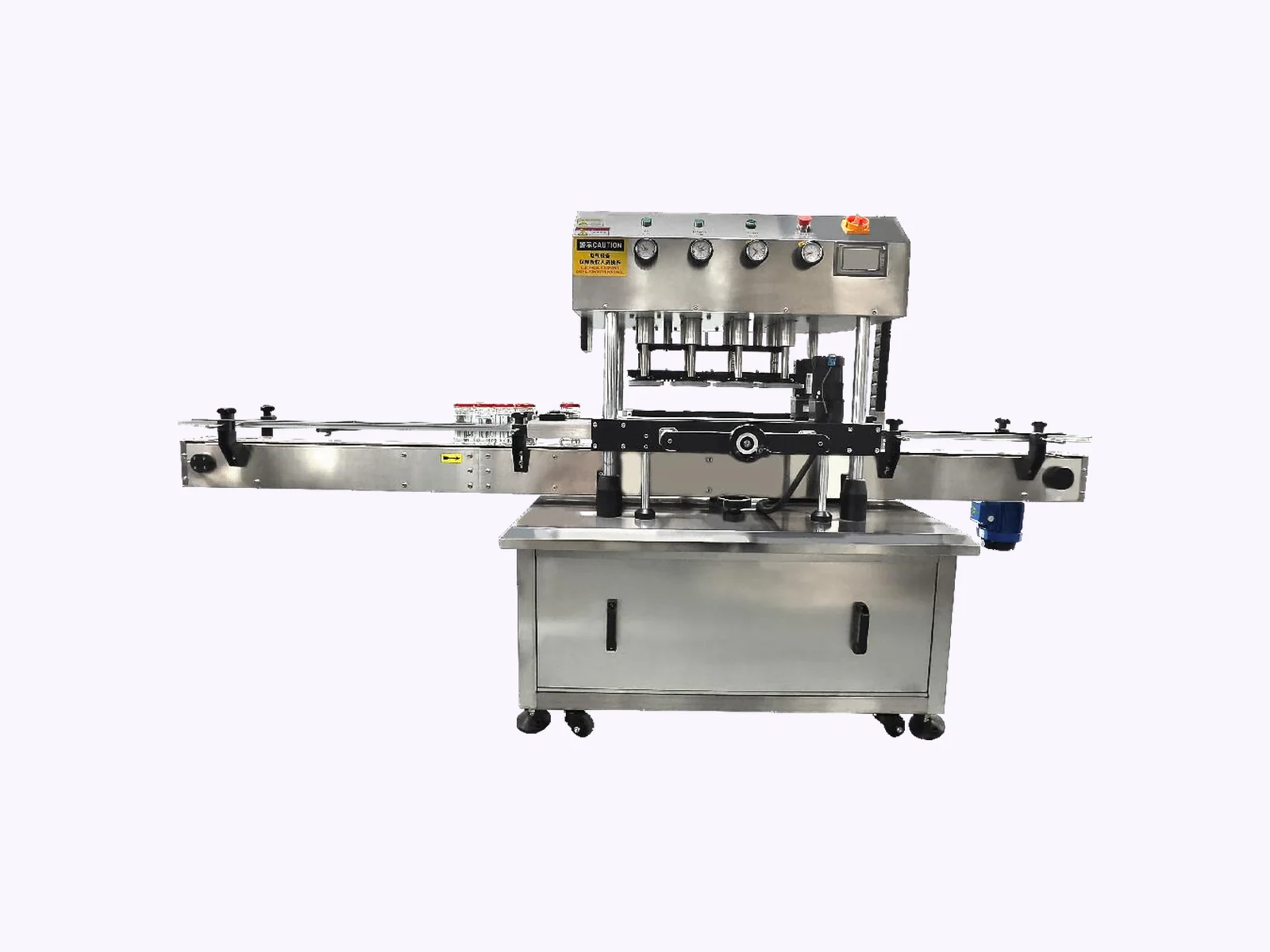
Four heads run 50–90 jars a minute on 15–100 mm caps.
Discuss This Application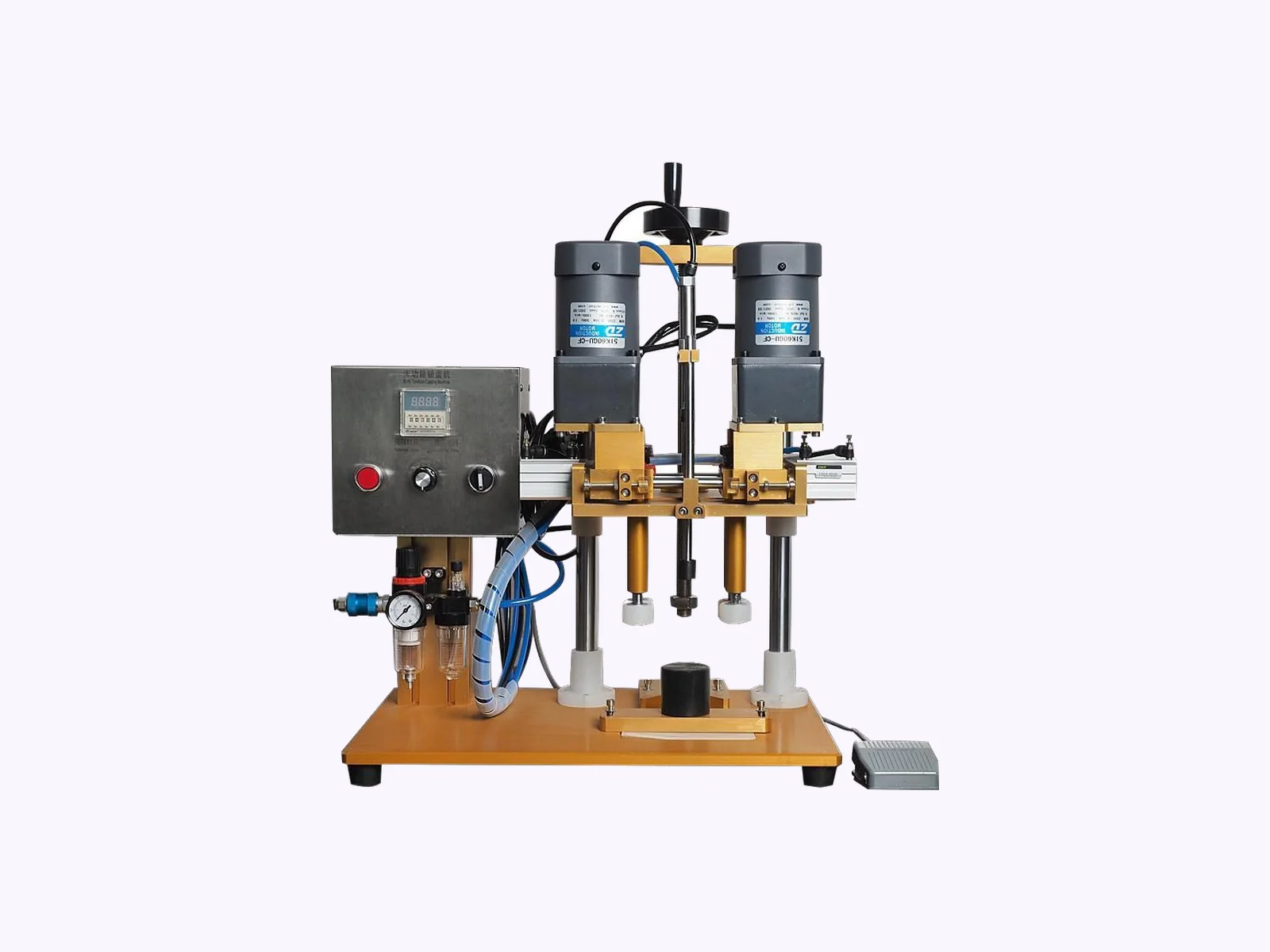
The benchtop unit has automatic and manual modes and takes bottles 15–350 mm tall.
Discuss This ApplicationWhat buyers ask before they order a capper.
Write the test method, the torque target and what ships with the machine into the quotation.
Discuss Acceptance CriteriaWith these details we can recommend a capper and check the fit.
Have another material or format?
Share your requirements.
Send your cap, bottle and bottles per minute.
We recommend a servo, press-on, four-head or benchtop capper.
Agree a torque and cap-marks test.
Review the price, the bottle capping machine configuration and terms.
Run the checks you agreed on the bottle capping machine, then pack and ship.
The servo capper takes pumps, duckbill caps and round threaded caps. A benchtop unit also takes spray caps. Send your pump and we confirm.
Not with one head. A screw cap and a snap-on cap need different actions, so we quote a separate head or machine.
Capping screws or presses a cap on. Crimping deforms a metal collar around a perfume bottle neck. See the crimping page.
For high speed, yes. A vibratory cap feeder is available on request; for hand feeding you do not need one.
On the machine, to a value you agree. We check removal torque on a sample batch during the test.
Tell us the cap and the bottle first. Add the rest when you have it.
Send a cap, a bottle and your target rate. We reply with the capper we recommend.
Get a Quote