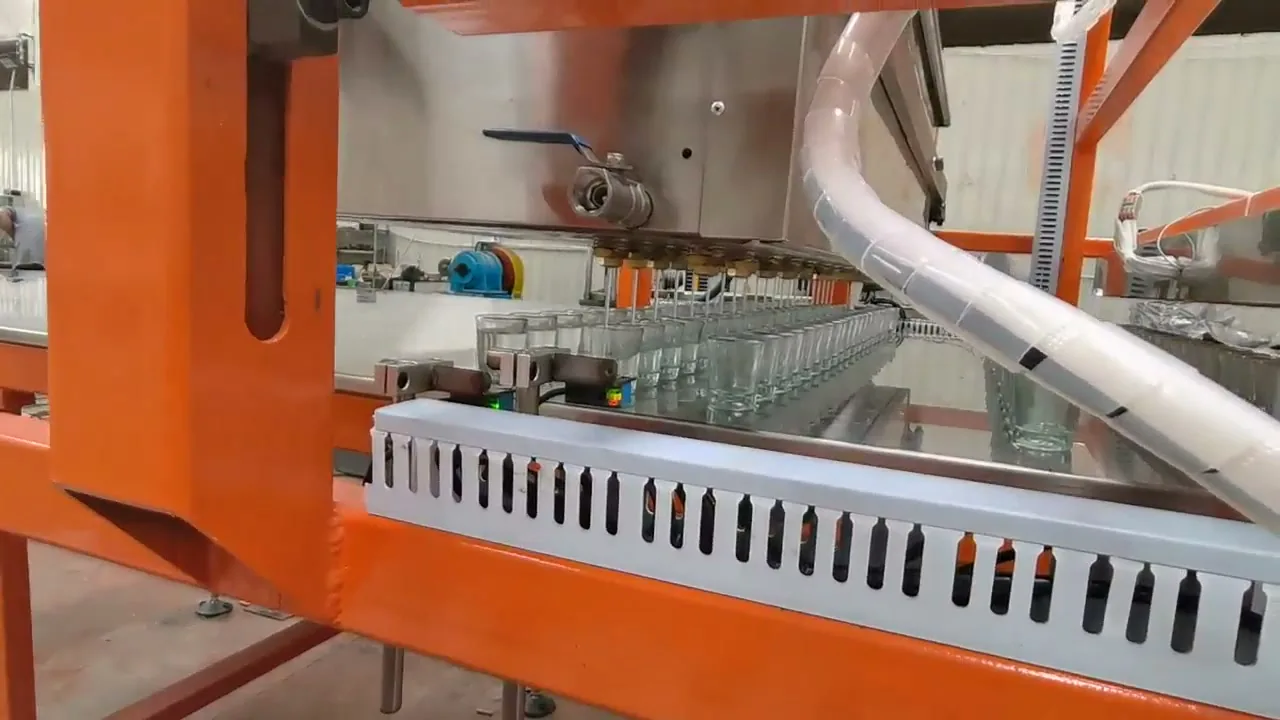
Who Builds Your Wax Mixing Machine?
Most of our core machines are made in our own factory. Your quotation names who builds this model, the tank, the heating and what is tested before shipment.
Uneven scent and color between batches usually start in the mixing step. A wax mixing machine blends wax, fragrance and dye in a heated tank, so every batch gets the same treatment. Configured per project.
Request a QuoteView Photos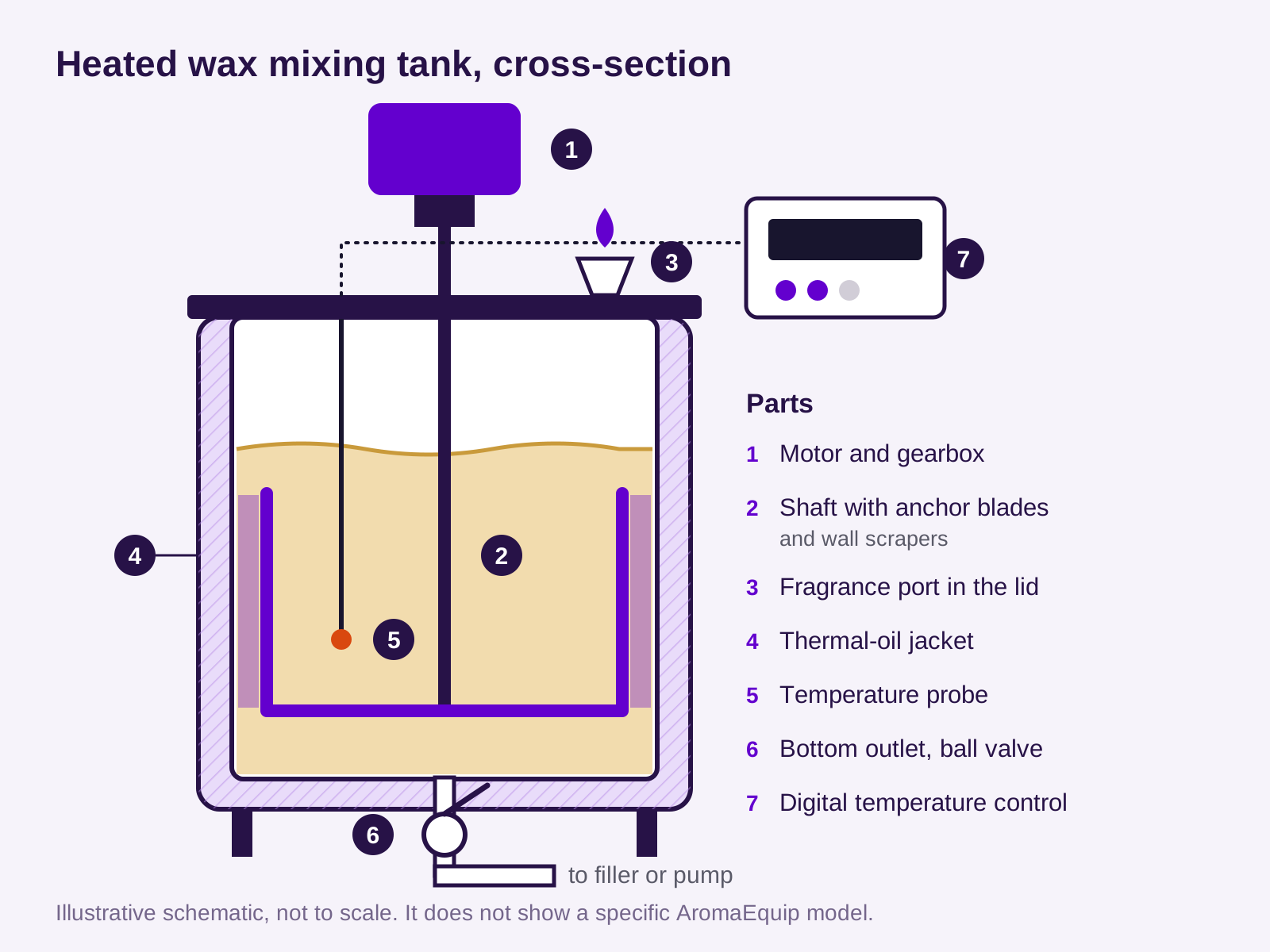
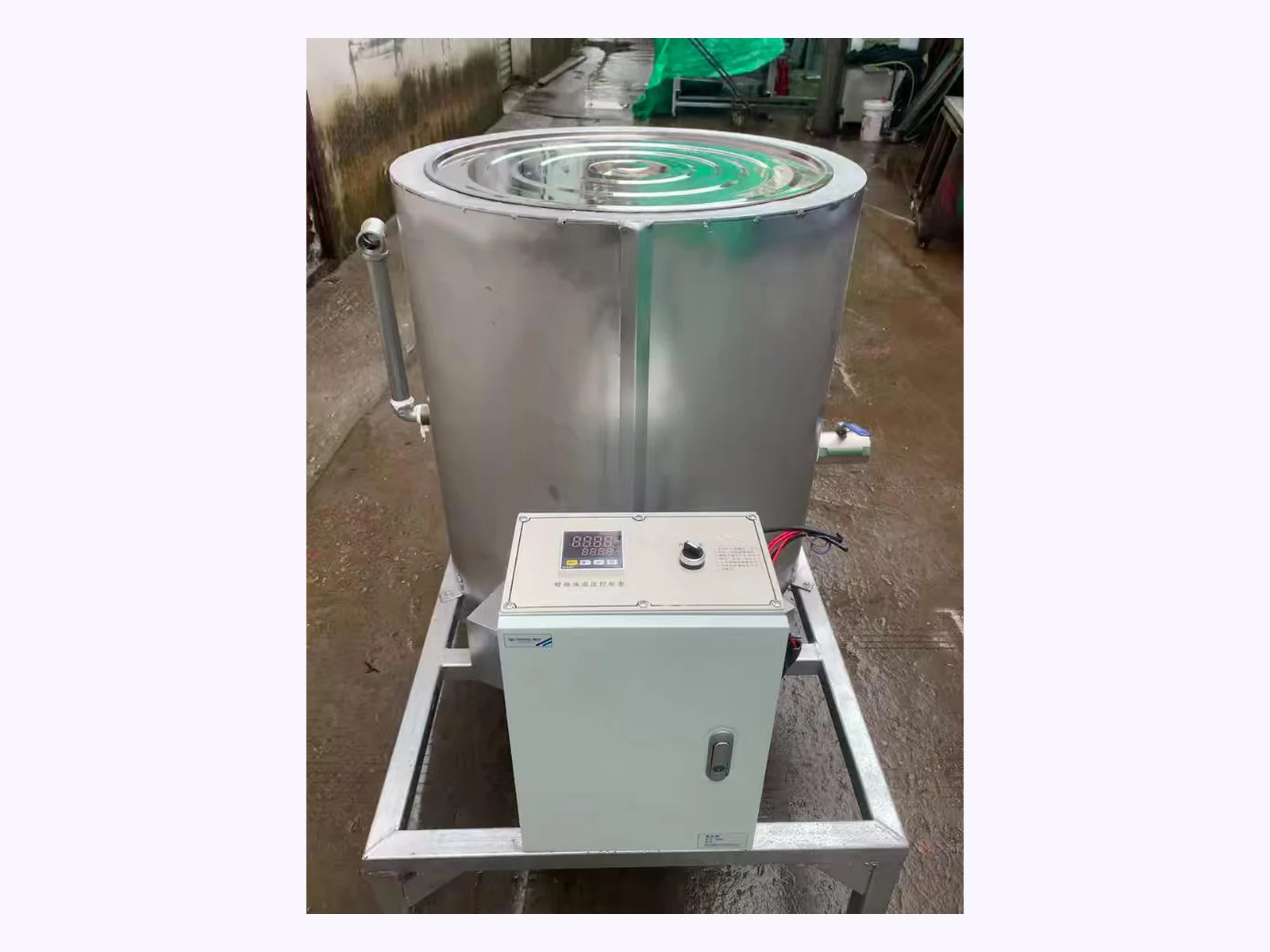
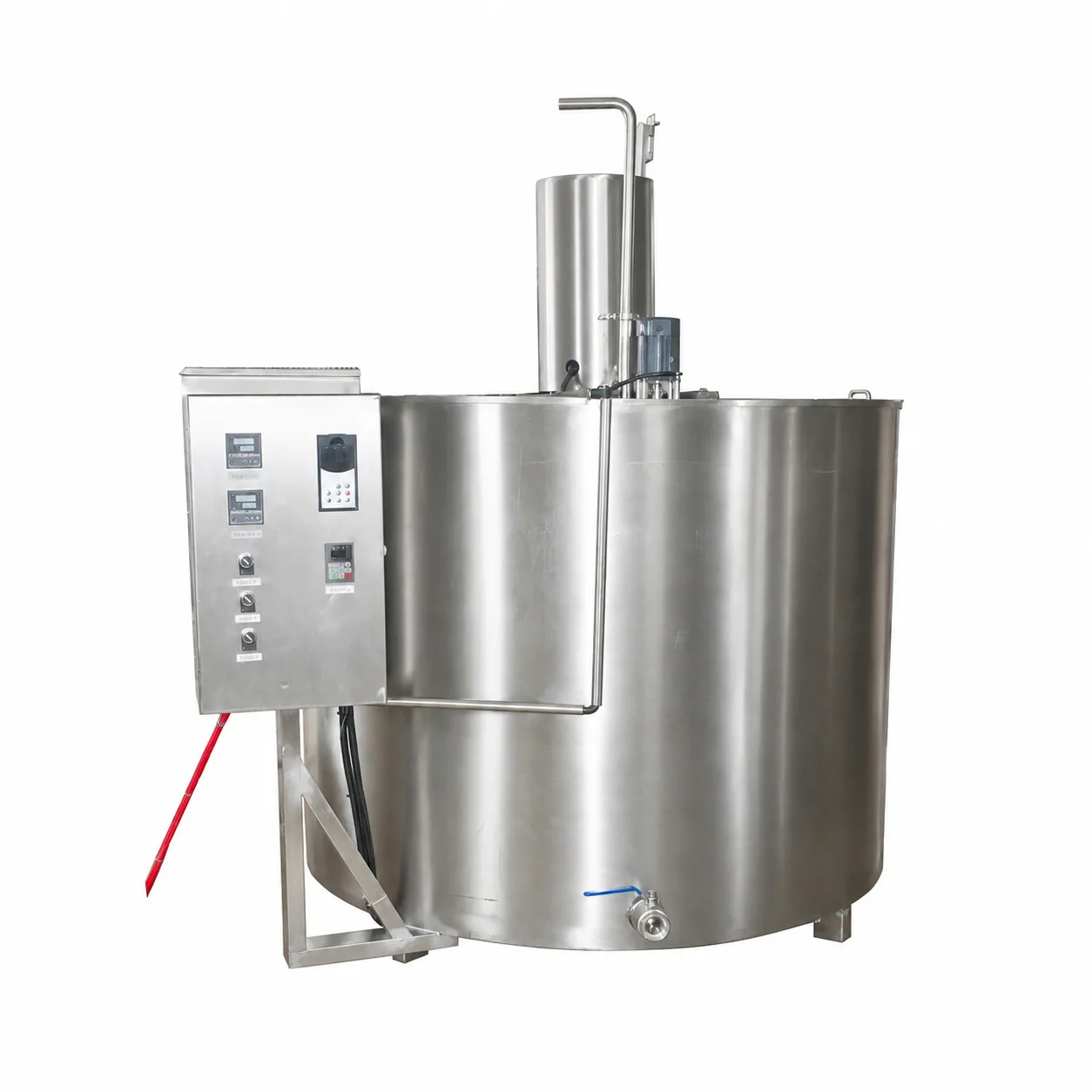
Mixing is the step where wax, fragrance oil and dye become one even batch. A wax mixing machine is a heated tank with a slow agitator. The jacket holds the wax at temperature while the blades turn, so fragrance goes in at a controlled heat and the color is the same from the first jar to the last.
Our oil-jacketed wax melters hold about 150 kg and 250 kg, and our melting tank holds about 600 kg per batch. A mixing machine adds an agitator, a fragrance port and the outlet you need. Blend, batch size and layout differ on every candle line, so we quote mixers per project and do not publish a model list yet.
Discuss Your ApplicationThese four decisions shape the quotation.
Most of our core machines are made in our own factory. Your quotation names who builds this model, the tank, the heating and what is tested before shipment.
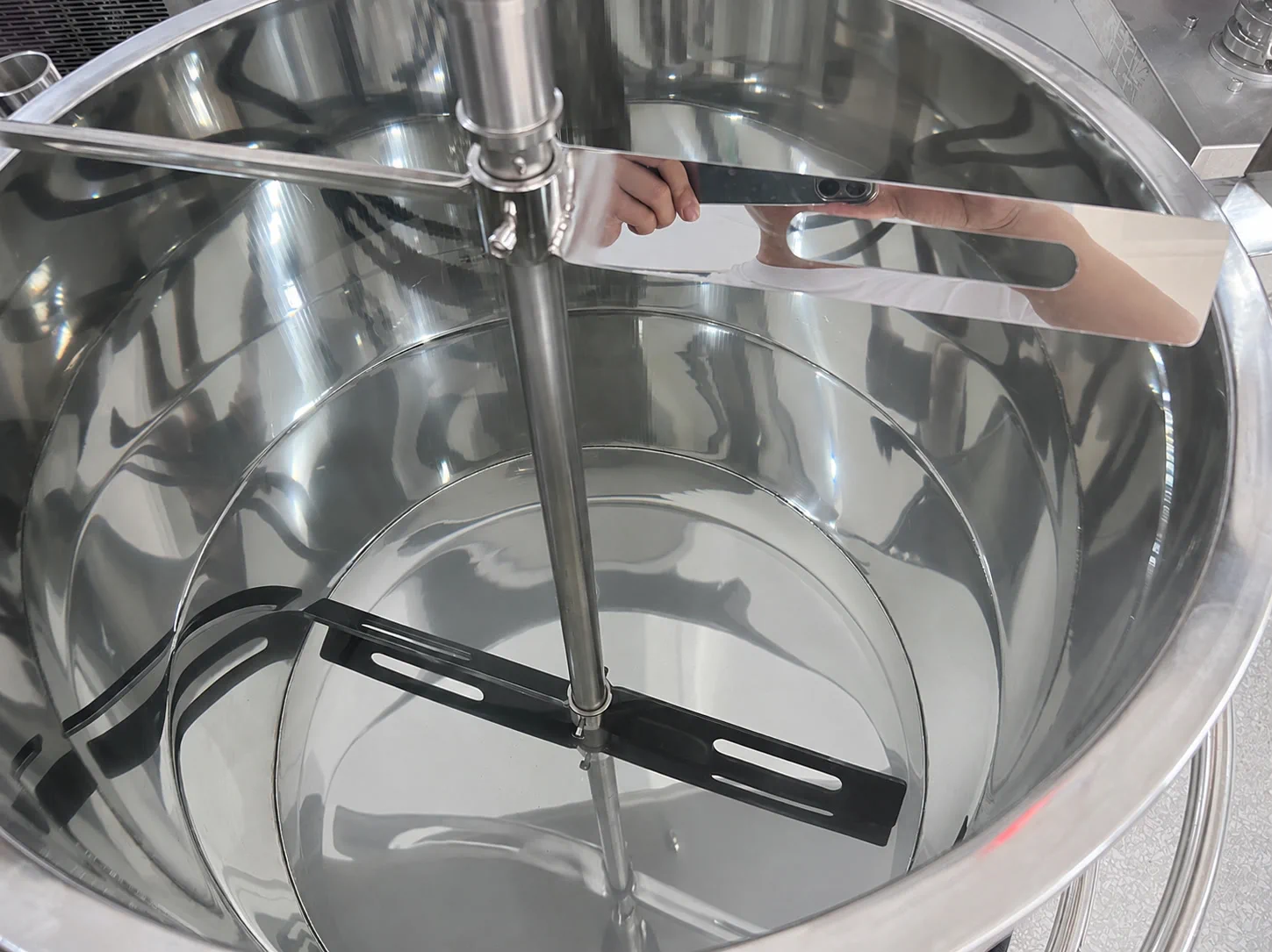
A slow anchor with wall scrapers suits thick, high-load blends. A paddle suits thin wax. Say how thick your mix is and how fast you need it blended.
Wax makers give an add temperature for each wax. A lid port lets you add scent without lifting the lid, which keeps heat and fragrance in the tank.
Dye and scent carry over. A smooth interior, an outlet that drains fully and easy lid access cut the changeover time.
Send wax types, fragrance load, dye use and batch weight. We tell you what we would quote, or what we still need to know.
A heated tank, a slow agitator and a controlled point to add scent. The figure shows the parts; the steps show how one batch runs.
The agitator changes more than anything else from one project to the next. Use this table to describe what you need.
| Agitator | How It Works | Suits | Watch For |
|---|---|---|---|
| Anchor with wall scrapers | Wide blades follow the tank wall and scrapers keep wax moving where it would stick | Thick or high-load blends, soft wax, dye chips | Slower mixing in the middle of a tall tank |
| Paddle | Flat blades turn near the center at low speed | Thin, fully melted wax and liquid dye | Dead zones near the wall of a wide tank |
| Propeller | Small blades at higher speed pull wax through the tank | Thin blends in small batches | Pulls air into the wax and foams if run too fast |
| Hand paddle | An operator stirs a pot | Samples and test batches | Mixing time depends on the person |
A 300 jin pot holds about 150 kg of wax. These figures show what that batch turns into. They are arithmetic on assumed values, not a performance claim for any machine.
Fragrance load limits differ by wax: many container waxes are used at roughly 6 to 10 percent by weight, and each wax maker states its own maximum. Melt, blend, hold and clean times depend on your recipe, so we measure them in a test instead of quoting a figure.
Write the blend test, the pass criteria and what ships with the machine into the quotation.
Discuss Acceptance CriteriaWith these details we can say what we would build and what we still need to confirm.
Have another material or format?
Share your requirements.
Mixing machines are configured per order, so these tables list what we confirm. Pot and tank sizes are those of our melters.
The core choices that change price and performance.
| Parameter | What to Confirm |
|---|---|
| Tank capacity | Kilograms per batch. Our oil-jacketed pots hold about 150 kg and 250 kg and our melting tank about 600 kg. Other sizes are quoted. |
| Heating | Thermal-oil jacket with digital control, as on our melters. |
| Agitator | Type, motor power and speed range for your blend. A speed control is worth having. |
| Fragrance port | A lid port so scent goes in without opening the tank. |
| Outlet | Bottom drain with a ball valve, sized for your hose or pump. |
| Lid and access | Hinged lid, a way to check the level and room to wipe the interior. |
Your blend decides the agitator and the temperature plan.
| Parameter | What We Check |
|---|---|
| Wax blend | Soy, paraffin, palm and blends differ in melt point and viscosity. Send the data sheet. |
| Fragrance load | Percent of wax weight. Higher loads thin the mix and need more blend time. |
| Add temperature | The temperature your wax maker gives for adding fragrance. It sets how long the batch must be held. |
| Dye | Liquid dye mixes fast; chips and blocks need time and warmth to dissolve. |
| Hold time | How long the blend waits before pouring. |
Settle the site before the tank is built.
| Parameter | What We Check |
|---|---|
| Footprint | Our 150 kg and 250 kg pots are about 1.05 m and 1.2 m long. A mixer motor adds height above the lid. |
| Floor load | A full 250 kg pot plus the machine needs a floor that can carry it. |
| Electrical | Heater plus agitator motor. Tell us your supply voltage and phase. |
| Wax outlet | Gravity or pump to the filler, with the heights and distances. |
| Ventilation | Fragrance vapor needs extraction above the tank. |
Agree a blend test before the order is confirmed.
| Parameter | What We Check |
|---|---|
| Blend evenness | Pour sample candles from the start, middle and end of the batch and compare color and scent. |
| Temperature | Compare the panel reading with a probe placed in the wax. |
| Air | Look for bubbles and a rough top on the samples. They point to an agitator that runs too fast. |
| Seals | Check the shaft seal, lid and drain for leaks. |
| Records | Agree before you order whether test records or video ship with the machine. |
Mixing time is part of your daily cycle.
| Parameter | What We Check |
|---|---|
| Batches per day | Add melt, mix, hold and clean time. We measure these in a test with your wax and do not publish a rate without one. |
| Batch size | A 150 kg batch fills about 660 candles of 8 oz. Check that your filler can empty the tank before the wax cools. |
| Second tank | Two tanks let one blend while the other feeds the filler. |
A mixing machine next to a plain melter, a large tank and mixing by hand.
| This EquipmentWax Mixing Machine | Wax Melting Machine | Melting Tank | Hand Mixing | |
|---|---|---|---|---|
| What it does | Heats and blends wax, scent and dye | Melts and holds wax | Melts large volumes | Stirs in a pot with a paddle |
| Batch size | Quoted per project | About 150 kg or 250 kg | About 600 kg | A few kilograms |
| Fragrance added | Through a lid port at a set temperature | Poured in by hand | Poured in by hand | Poured in by hand |
| Batch consistency | Same blend time every batch | Depends on the operator | Depends on the operator | Varies by operator |
| Agitator | Yes | No | No | Hand paddle |
| Check first | Agitator and cleaning | Pot size | Floor load | Repeatability |
Where a mixing machine helps, and what to confirm first.
A closed, heated tank spreads fragrance through the whole batch before you pour. Send your fragrance load and the temperature you add it at.
Discuss This ApplicationA tank gives you the same shade every time. Tell us the dye form and how often you change colors, because changeover time decides how many colors a day you can run.
Discuss This Application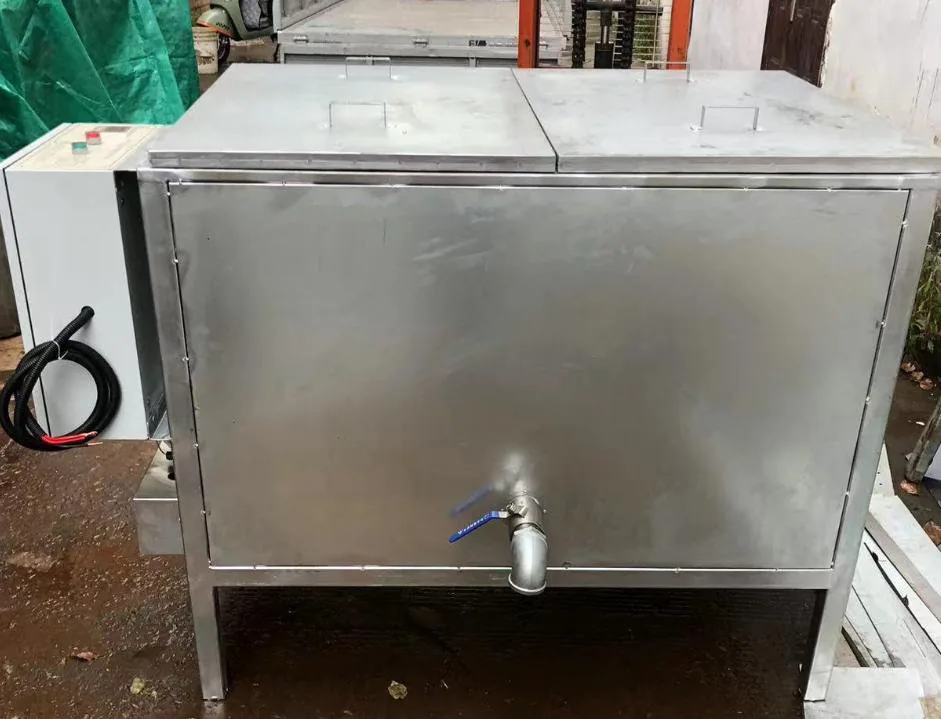
Mixing soy with paraffin, or adding a harder wax to raise the melt point, needs even heat and time. Send the ratios you run.
Discuss This Application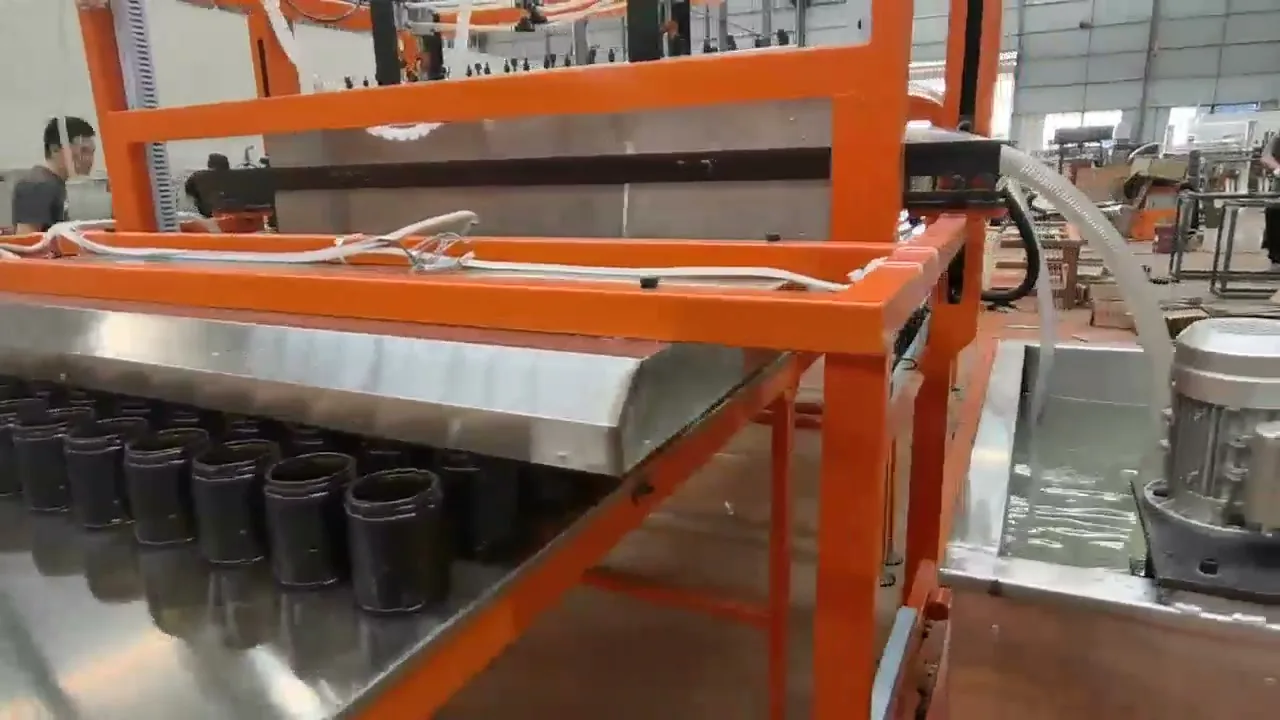
Blend in one tank, then pump to a heated holding pot at the filler. Send a layout with heights and distances.
Discuss This ApplicationWhat candle makers ask about mixing before they order.
Send your recipe, batch weight and colors per week.
We describe the tank, heating and agitator we would build.
Agree a blend test and how evenness will be judged.
Review the price, the wax mixing machine configuration and terms.
Run the checks you agreed on the wax mixing machine, then drain, pack and ship.
Not yet. Mixing machines are quoted per project because agitators and batch sizes vary. Our melting pots and melting tank have their own pages. Send your recipe and we tell you what we would build.
For small batches, yes. Once you run several colors or scents a day, hand mixing makes batches differ. A mixing machine repeats the same blend time every time.
Follow your wax maker data sheet, which gives an add temperature for each wax. Many soy container waxes call for roughly 180 to 185°F (82 to 85°C), and the candle is poured much cooler. A probe and a lid port let you hit that number every batch.
It depends on the wax. Many container waxes are used at roughly 6 to 10 percent of the wax weight, and each wax maker states its own limit. Higher loads thin the mix and take longer to blend, so tell us your load when you ask for a quote.
A slow anchor with wall scrapers is the safe choice for thick or high-load blends. A paddle works for thin wax. Fast propellers pull air in, so we reserve them for thin wax in small batches. We confirm the choice against your recipe.
Often yes, through the bottom drain. Whether a stirred tank or a separate holding pot is better depends on your line, so send a layout.
Wax types and ratios, fragrance load, dye form, batch weight, batches per day and your supply voltage. Photos of your current setup help.
Tell us the recipe and the batch weight first. Add the rest when you have it.
Send the wax types, fragrance load and batch weight. We reply with what we would build and what we still need to confirm.
Get a Quote