Who Builds Your Wick Inserting Machine?
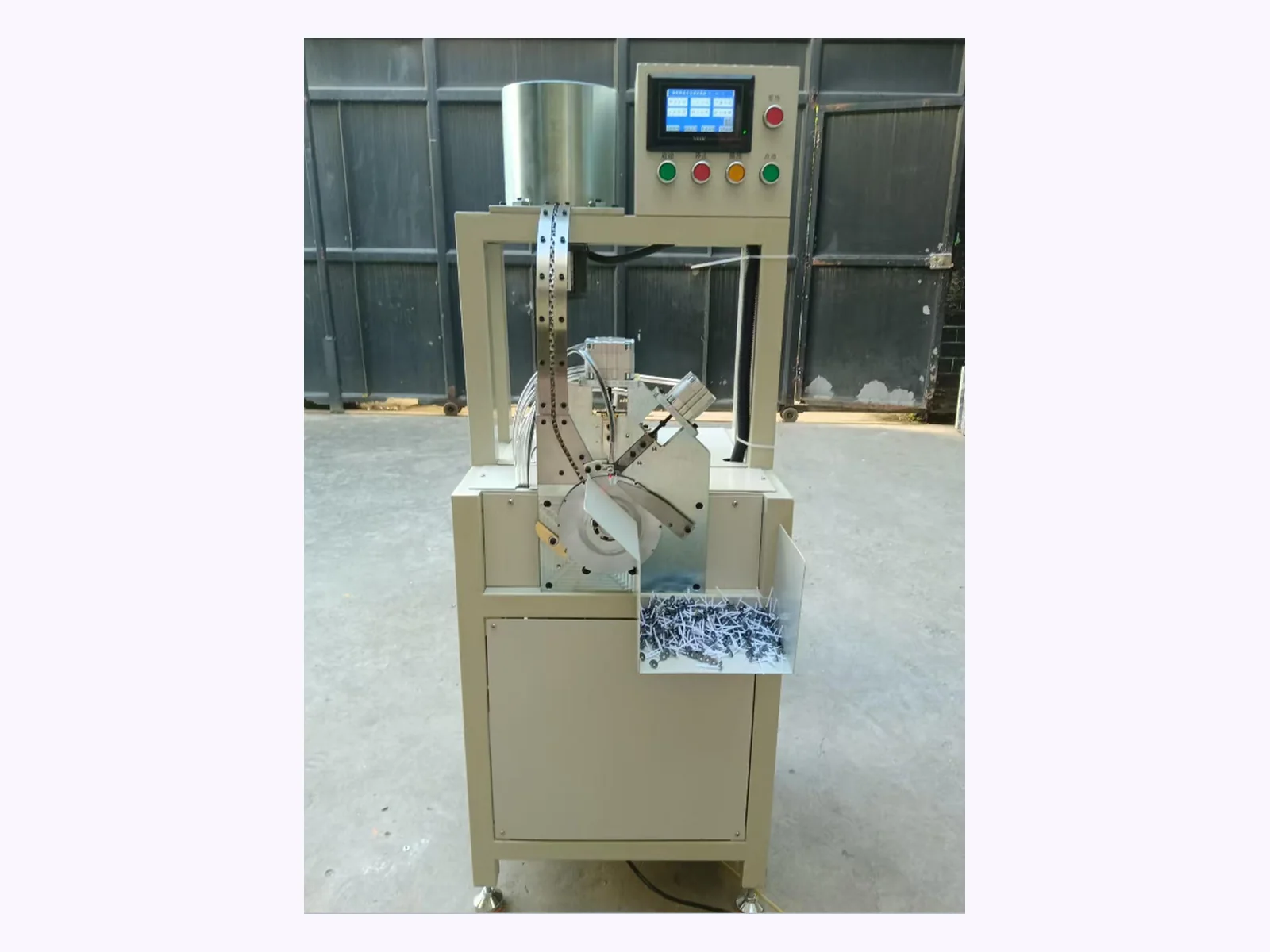
Most of our core machines are made in our own factory. Your quotation names who builds this model, the configuration and what is tested before shipment.
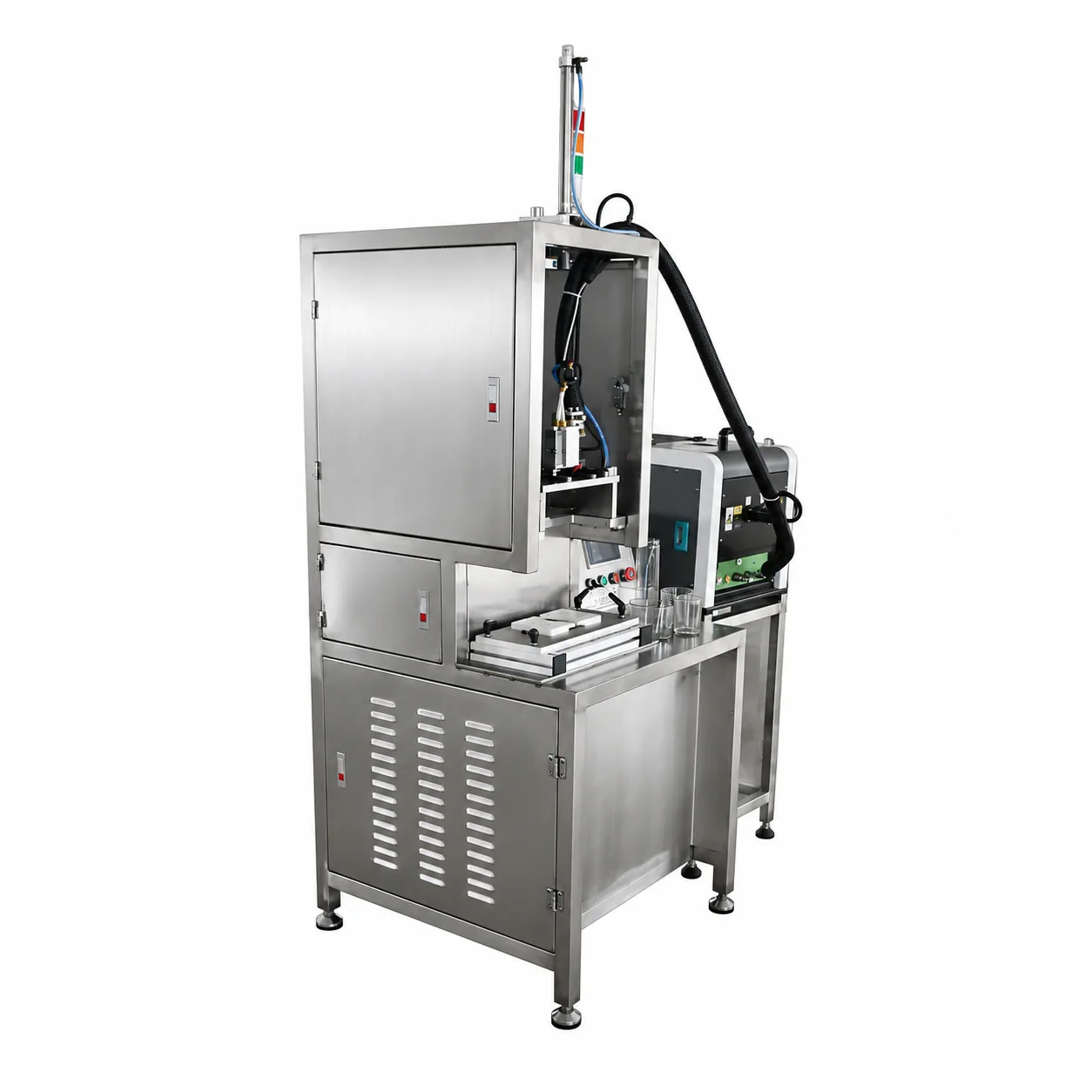
A wick that sits off-center spoils a jar candle before it is poured. An automatic candle wick insert machine sets each tabbed wick at the center of the base, so wicks start in the same place every time. Quoted to your jar.
Request a QuoteView Photos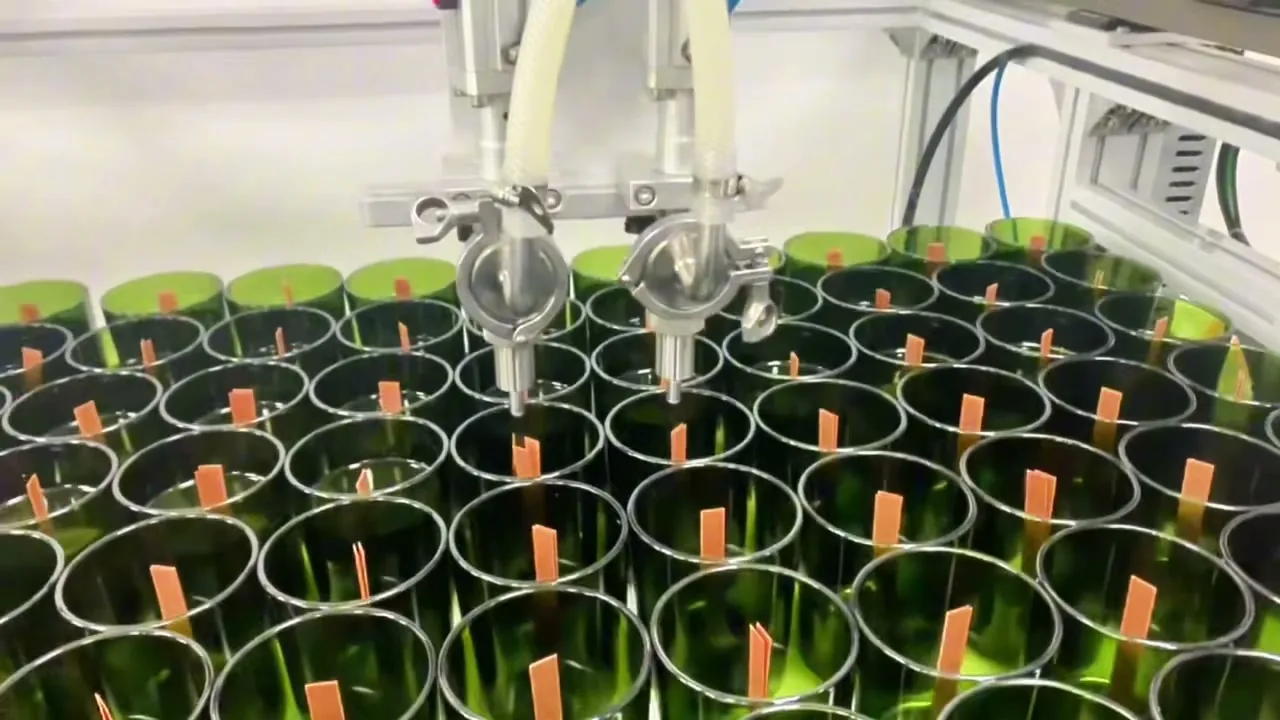
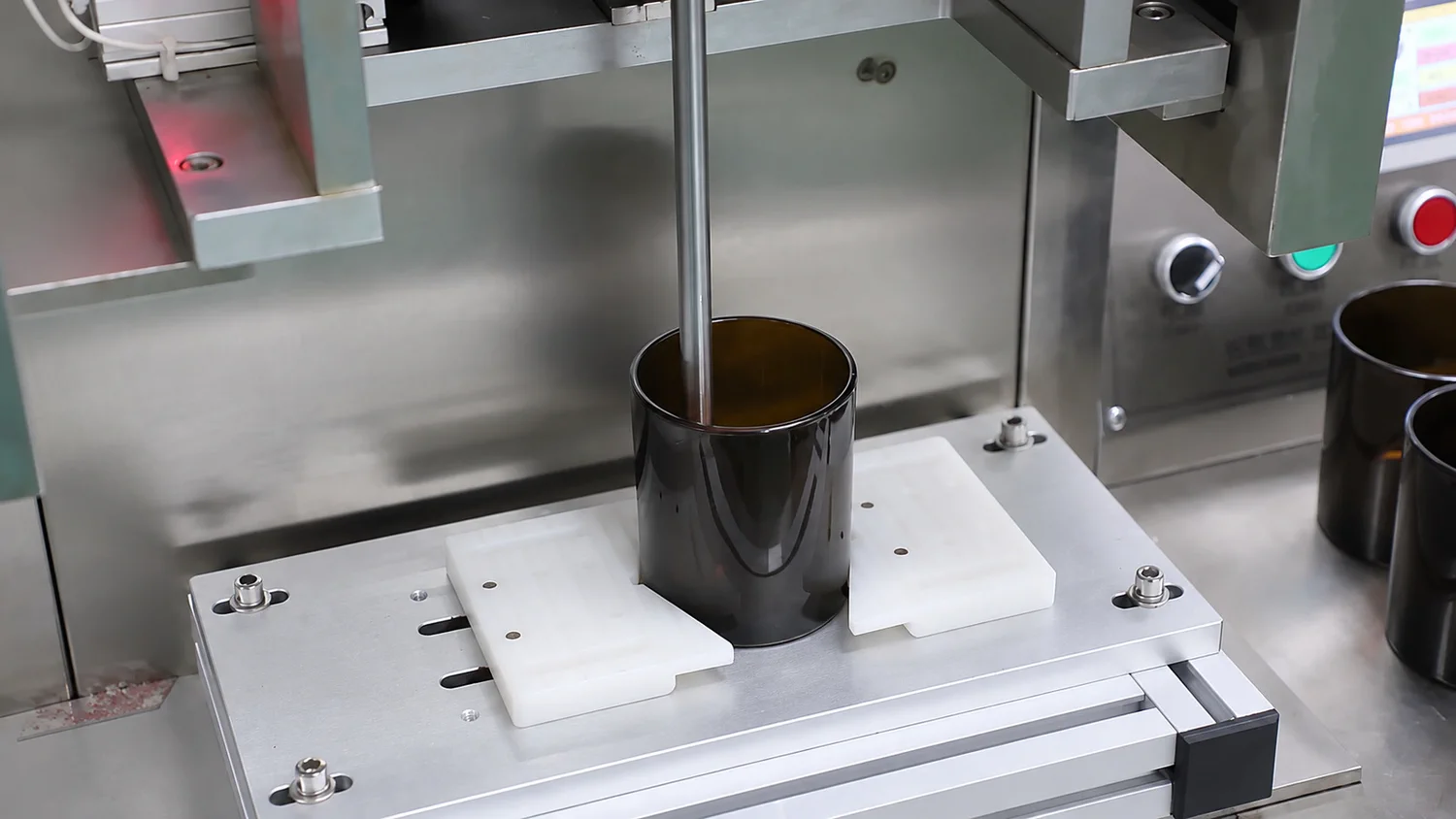
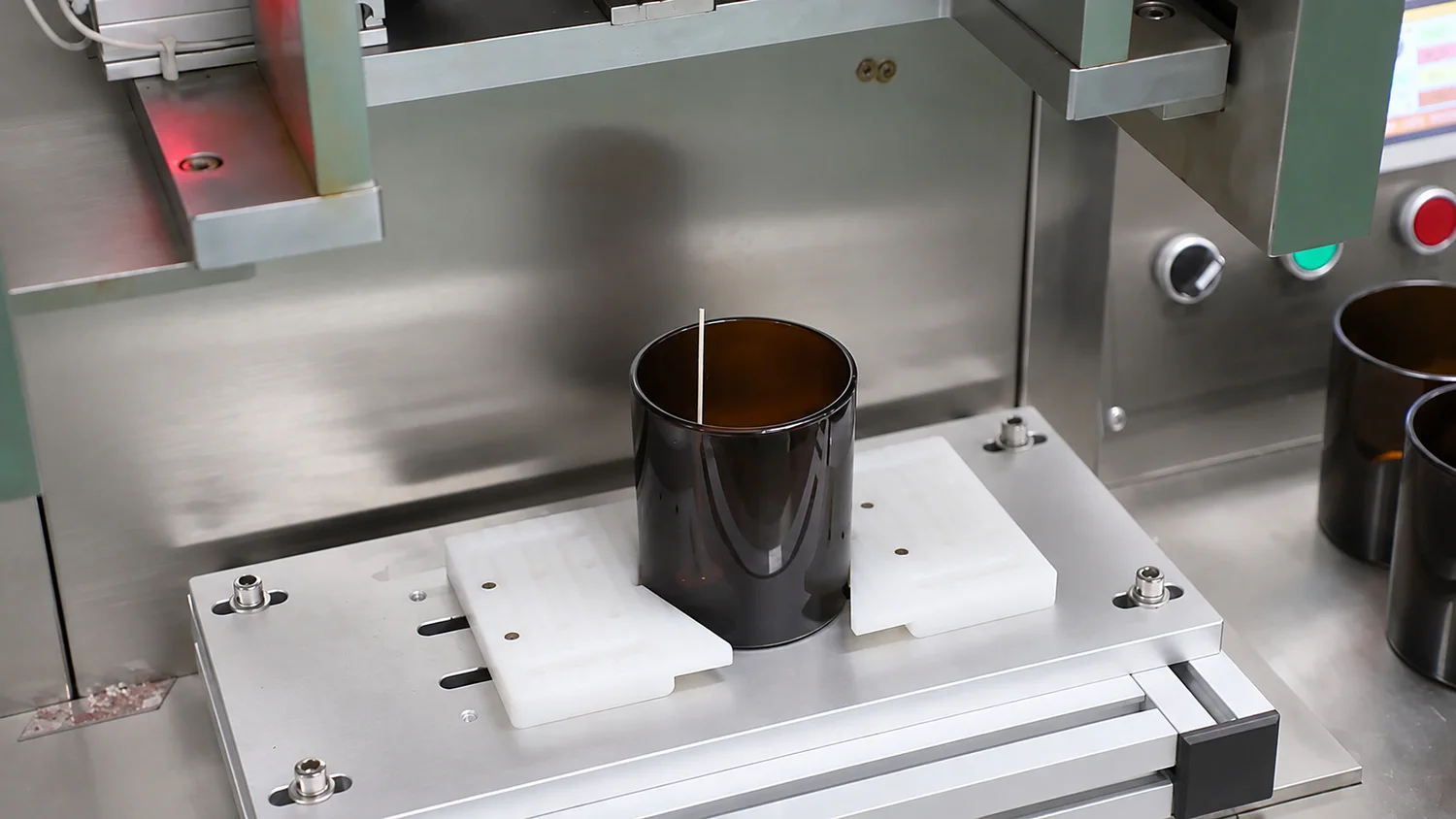
In a jar candle, the wick has to stand at the center of the base before you pour. A wick inserting machine picks up a wick that already has its metal tab, lowers it to the middle of the jar and presses the tab onto the glass. It replaces the glue dot and tweezers step done by hand, and it lands the wick on the same spot every time.
Inserting is a different step from tabbing. Our wick tabbing machine joins the wick to its tab; an inserter then places the finished tabbed wick in the jar. We quote inserters to suit your jar and wick. We do not publish models or speeds yet: send your jar and wick and we tell you what we would build.
Hand placement is slow, and each wick lands a little differently. Once the filler runs faster than a person can set wicks, placement becomes the step that limits the line, and the step that makes candles burn to one side.
Discuss Your ApplicationThese four decisions shape the machine.
Most of our core machines are made in our own factory. Your quotation names who builds this model, the configuration and what is tested before shipment.
Tab diameter, how the tab is held to the glass and the wick height decide how the wick is picked up and placed.
Flat, slightly domed or recessed bases hold a tab differently. Send a jar so we test the press on the real glass.
Some lines set the wick before filling, others after the wax is poured. Tell us which you use.
Send one jar and one wick with its base. We tell you what we would build and what we still need to know.
Feed, pick, place, press. The tab holding method is the choice that changes the machine most.
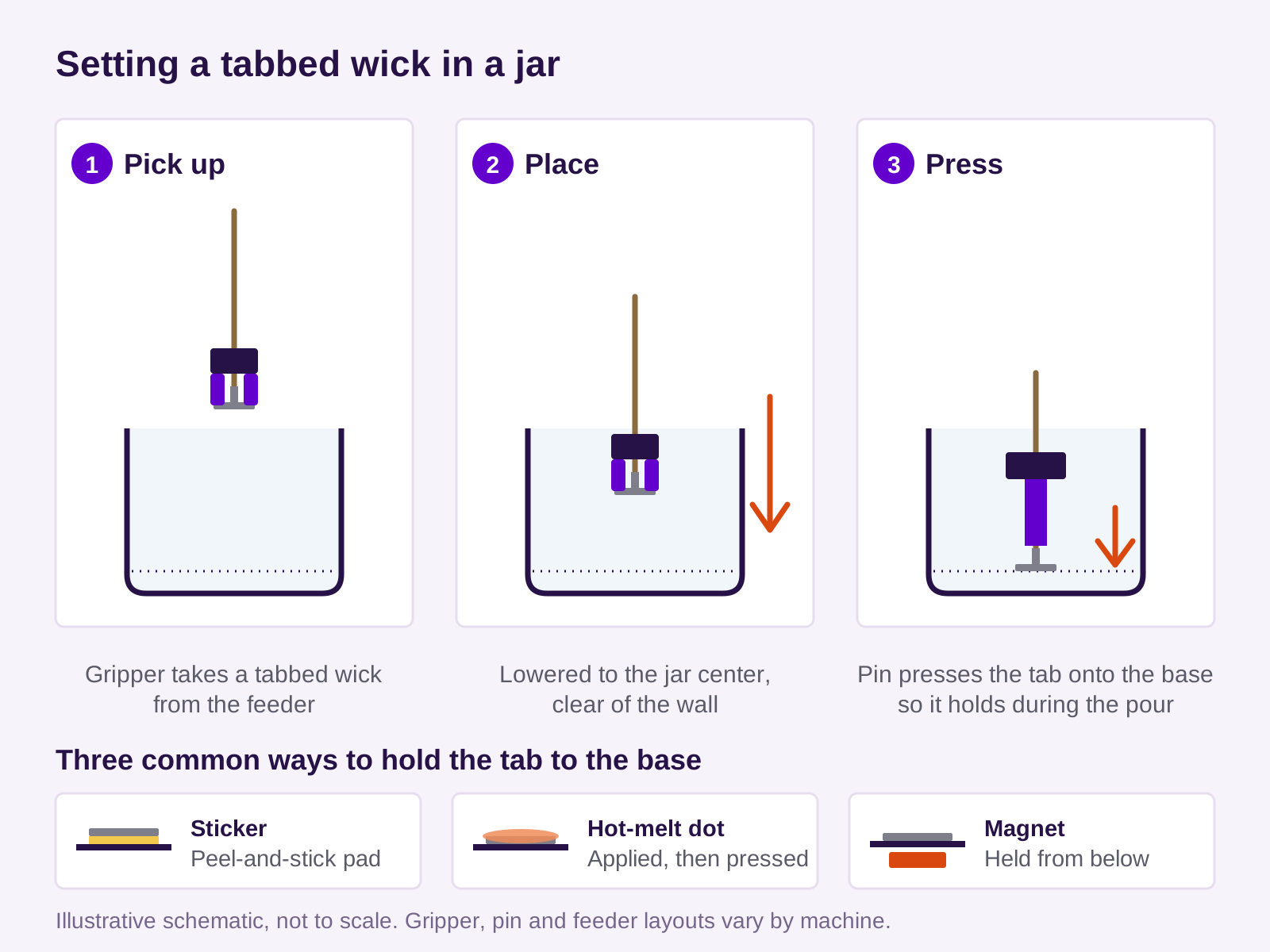
Choose the holding method first. It decides what the machine presses against and what you buy as consumables.
| Method | How It Holds | Suits | Watch For |
|---|---|---|---|
| Pressure-sensitive sticker | A tab with a pre-applied adhesive pad is pressed onto clean glass | Clean, flat bases and hand-fed or slower lines | Dust, oil or condensation on the glass weakens the bond |
| Hot-melt dot | A dot of hot glue goes on the base or the tab, then the tab is pressed into it | Higher speeds, uneven bases and hot pours | Glue temperature and open time; strings or drips if set wrong |
| Magnetic hold | A magnet under the jar holds a steel tab in place during the pour | Lines that move jars on plates and tabs that must stay unglued | Needs steel tabs; thick glass weakens the pull |
| Hold at the top only | The wick is not fixed to the base and a centering bar holds it at the rim | Wick placed after filling, or very wide jars | The base end can drift, so a centering bar may be needed |
An inserter should never be the slowest step on the line. This example uses an assumed filler rate of 1,200 jars an hour.
These numbers are arithmetic on an assumed rate, not a speed we publish. Tell us your own jars per hour and we say what the inserter would need to do.
Write the test method, the pass criteria and what ships with the machine into the quotation.
Discuss Acceptance CriteriaWith these details we can say what we would build for your jar and wick.
Have another material or format?
Share your requirements.
Inserting machines are configured per order. These tables list what we confirm.
The core choices that change the machine.
| Parameter | What to Confirm |
|---|---|
| Level of automation | Hand-fed station, semi-automatic, or in-line on a conveyor. |
| Wick feed | Pre-tabbed wicks from a hopper or a feeder bowl, and how they are oriented. |
| Tab holding | Sticker, hot-melt dot or magnet. It sets the pressing unit and the consumables. |
| Pressing | Press force and dwell on your glass base. |
| Jar handling | Single jar, tray or conveyor with guides. |
These details decide the pick-up and placement.
| Parameter | What We Check |
|---|---|
| Wick length | Jar depth plus the length you need above the rim for a centering bar or for trimming. |
| Tab size | Diameter and thickness of the metal base. Many tabs are about 20 mm (3/4 in) across, but send yours. |
| Base holding | Pre-applied sticker, hot-melt dot or magnet. |
| Jar depth | The placement arm must reach the base without touching the wall. |
| Base shape | Flat, domed or recessed glass. |
Settle the layout around your filler.
| Parameter | What We Check |
|---|---|
| Footprint | Station size and the jar path in and out. |
| Compressed air | Pressure and flow if the unit is pneumatic. |
| Electrical | Supply voltage and phase, and a hot-melt unit if you use one. |
| Operator | Where the person stands, how wicks are loaded and how a jam is cleared. |
A wick that is off-center is a visible fault.
| Parameter | What We Check |
|---|---|
| Position | Measure how far the wick sits from the jar center across a test batch. |
| Upright | Tip the jar gently and check the wick holds. |
| Hold | Pour wax at your temperature and check the tab stays down. |
| Misses | Count jars with no wick or a bent wick in a run. |
The inserter should not slow your filler.
| Parameter | What We Check |
|---|---|
| Target rate | Jars per hour divided by 60, plus a margin. Ask for a figure for your jar. |
| Wick supply | Refill the hopper without stopping the line. |
| Changeover | Time to switch jar size or wick type. |
Wick inserting is one step. Compare it with tabbing, centering and cutting.
| This EquipmentWick Inserting | Wick Tabbing | Wick Centering | Wick Cutting | |
|---|---|---|---|---|
| What it does | Sets a tabbed wick in the jar | Joins wick to metal base | Holds the wick centered while wax sets | Cuts wick to length |
| When | Before or after filling | Before inserting | After filling | At the reel, or on the finished candle |
| Input | Pre-tabbed wick, empty jar | Wick and metal tab | Filled jar with wick | Wick reel, or a finished candle |
| Check first | Base shape and tab holding | Tab size and wick length | Jar rim and hold time | Wick type and cut length |
Four places a wick inserter fits.
A wick set before filling stays at the center while wax goes in. Send your jar so we test the press on its base.
Discuss This Application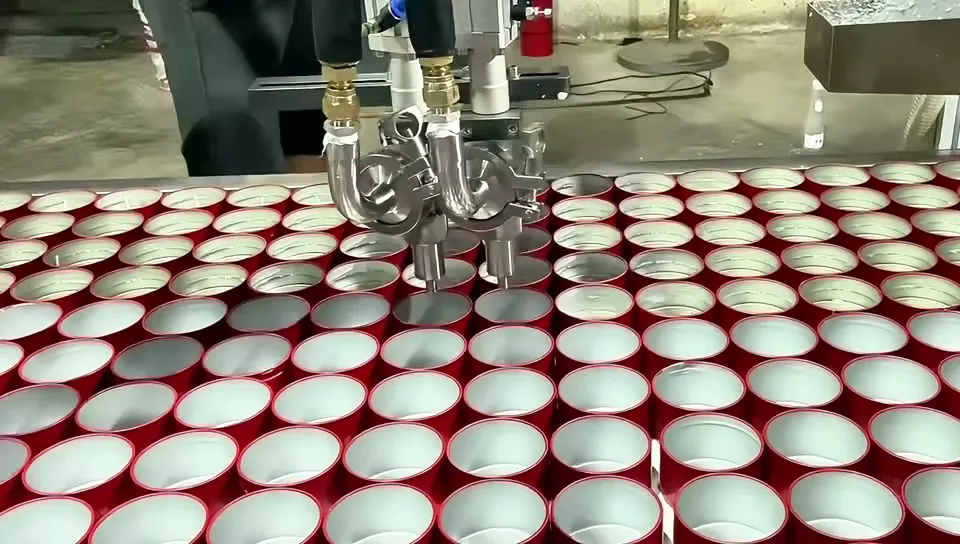
Small cups pack tightly on a tray. Check the cup diameter and how the tray holds it during pressing.
Discuss This Application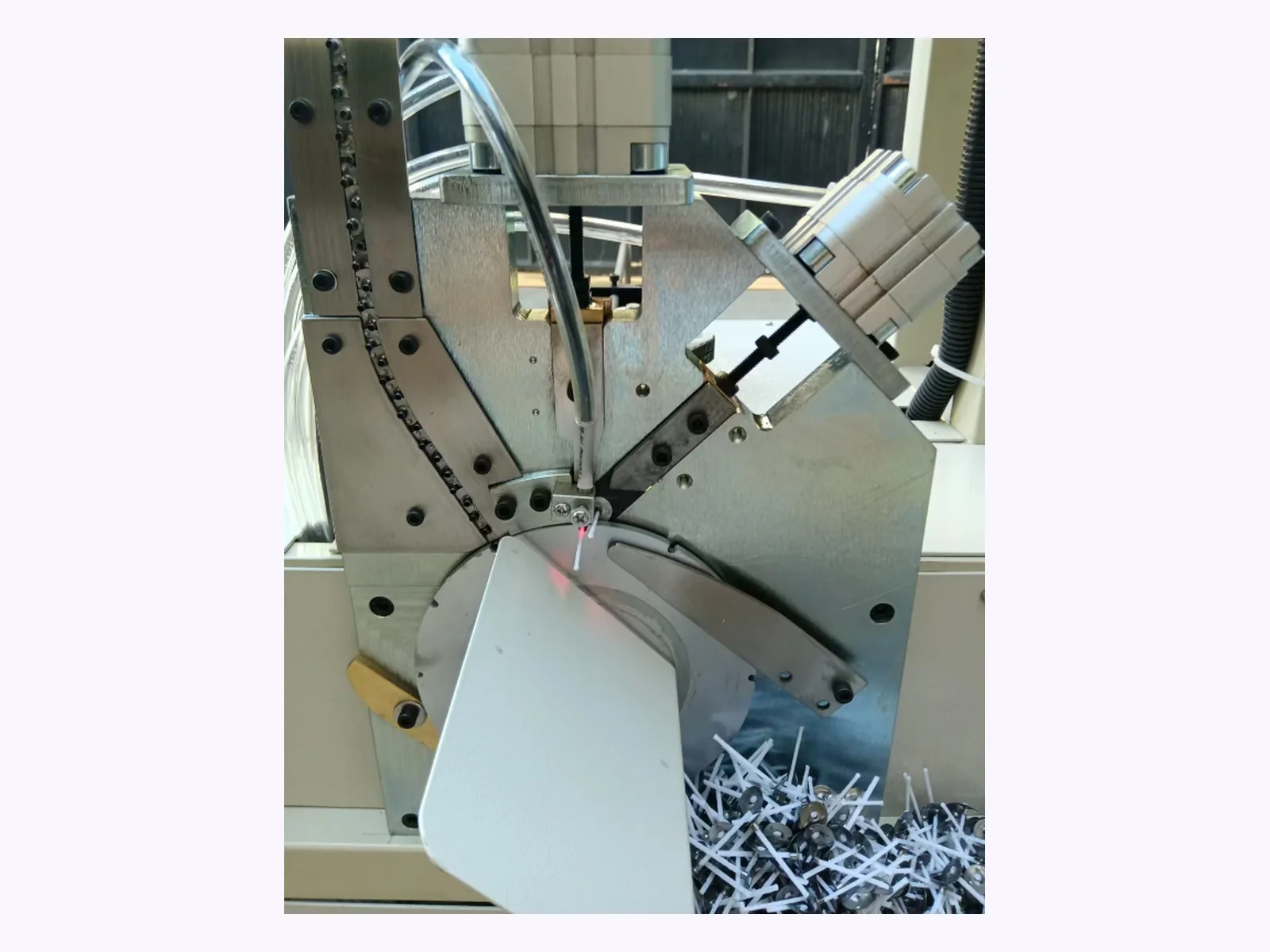
An inserter needs tabbed wicks. Our tabbing machine makes them, or you can buy them ready-made.
Discuss This Application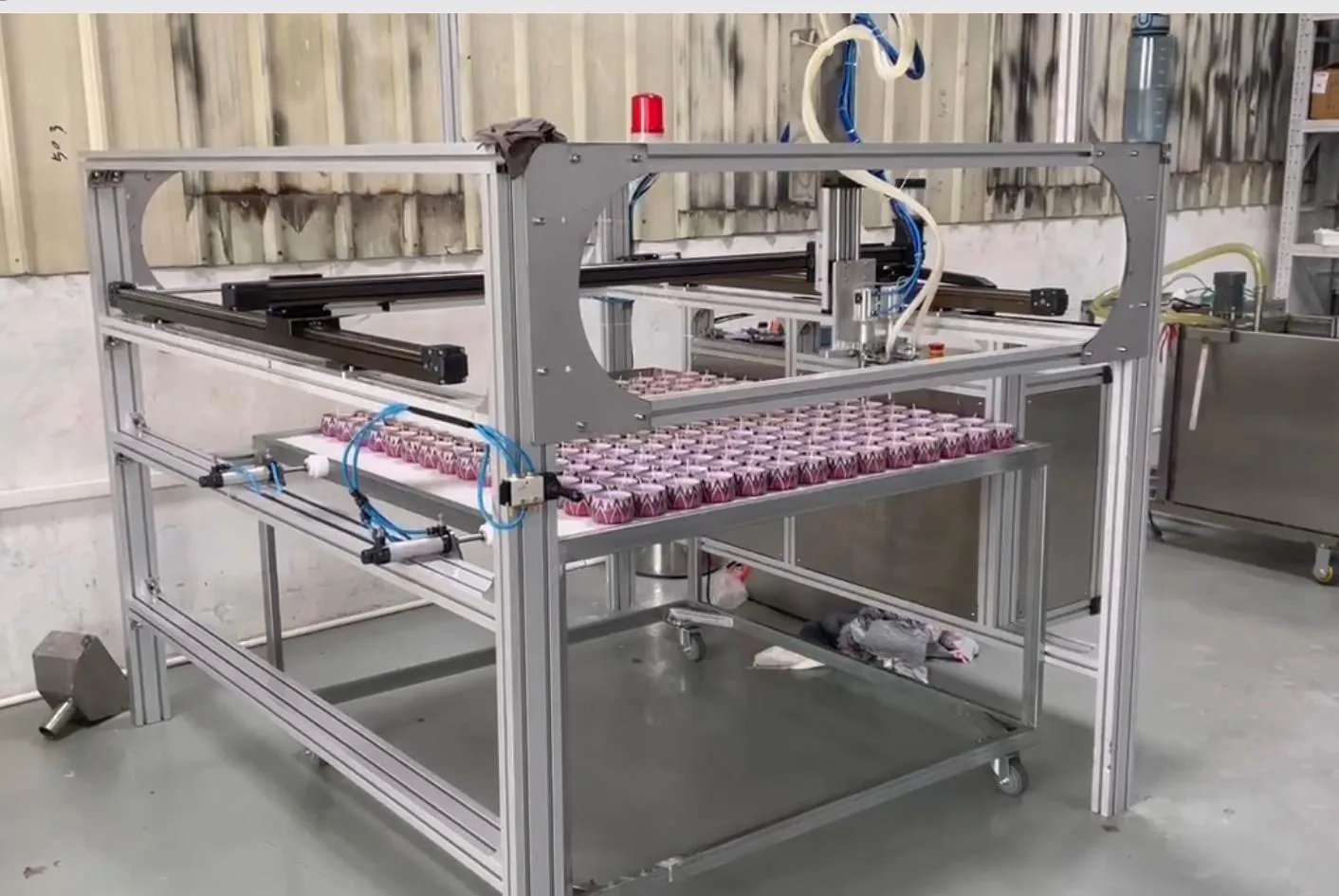
The inserter sits before the filler. Check that the jar path leaves room for the tray.
Discuss This ApplicationWhat buyers ask before they commit.
Send a jar, a tabbed wick and your jars per hour.
We describe the inserter we would build.
Agree a placement test and how center position is judged.
Review the price, the wick inserting machine configuration and terms.
Run the checks you agreed on the wick inserting machine, then pack and ship.
Tabbing joins the wick to its metal base. Inserting places the finished tabbed wick in the jar. Many lines use both.
Not yet. We quote inserters per jar and wick. Send samples and your jars per hour and we tell you what we would build.
Stickers are simplest on clean, flat glass. Hot-melt dots hold better on uneven bases and hot pours but need a glue unit. Magnets suit steel tabs on lines that move jars on plates. We test the method you prefer on your own jar.
Some processes set the wick after the pour and hold it with a centering bar. Which order works better depends on your wax, jar and filler, so tell us about your line.
It can, but a dome or recess changes how the tab sticks. Send a jar and we test the press.
Yes. Our wick tabbing machine joins wick and tab, and its output feeds an inserter.
A jar, a tabbed wick, how you hold the tab, jars per hour and your supply (air and voltage). Photos of your current station help.
Tell us the jar and the wick first. Add the rest when you have it.
Send a jar, a tabbed wick and your target rate. We reply with the inserter we would build.
Get a Quote